






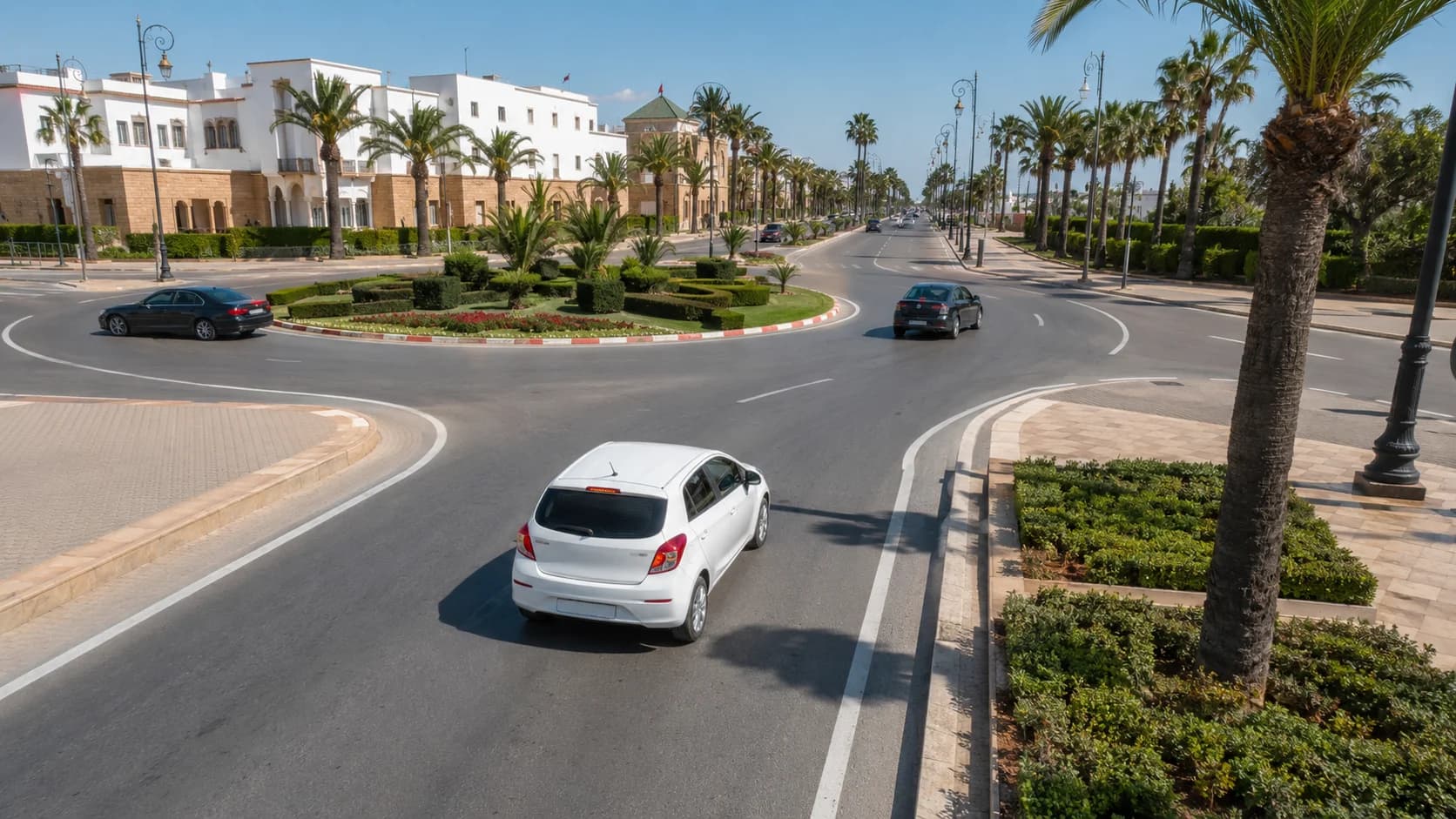
Driving roundabouts in Rabat is usually less stressful than in Casablanca or Marrakech, but it still takes a little confidence if you are new to Moroccan roads. The capital has wider avenues, calmer traffic rhythm and more organized junctions, yet tourists can still feel unsure when entering multi-lane roundabouts, reading local driver behaviour or choosing the correct lane before an exit. This guide explains Rabat junctions, Morocco roundabout rules, right of way, lane positioning and the easiest car type for nervous drivers.
Table of Contents
-
Why Rabat is a gentle place to learn
-
Roundabout right-of-way in Morocco
-
Lane choice on multi-lane roundabouts
-
Rabat's busiest junctions to know
-
Reading local driving behaviour
-
Indicators, horns and eye contact
-
The easiest car for nervous drivers
-
Building confidence in your first hour
-
FAQ
Why Rabat is a gentle place to learn
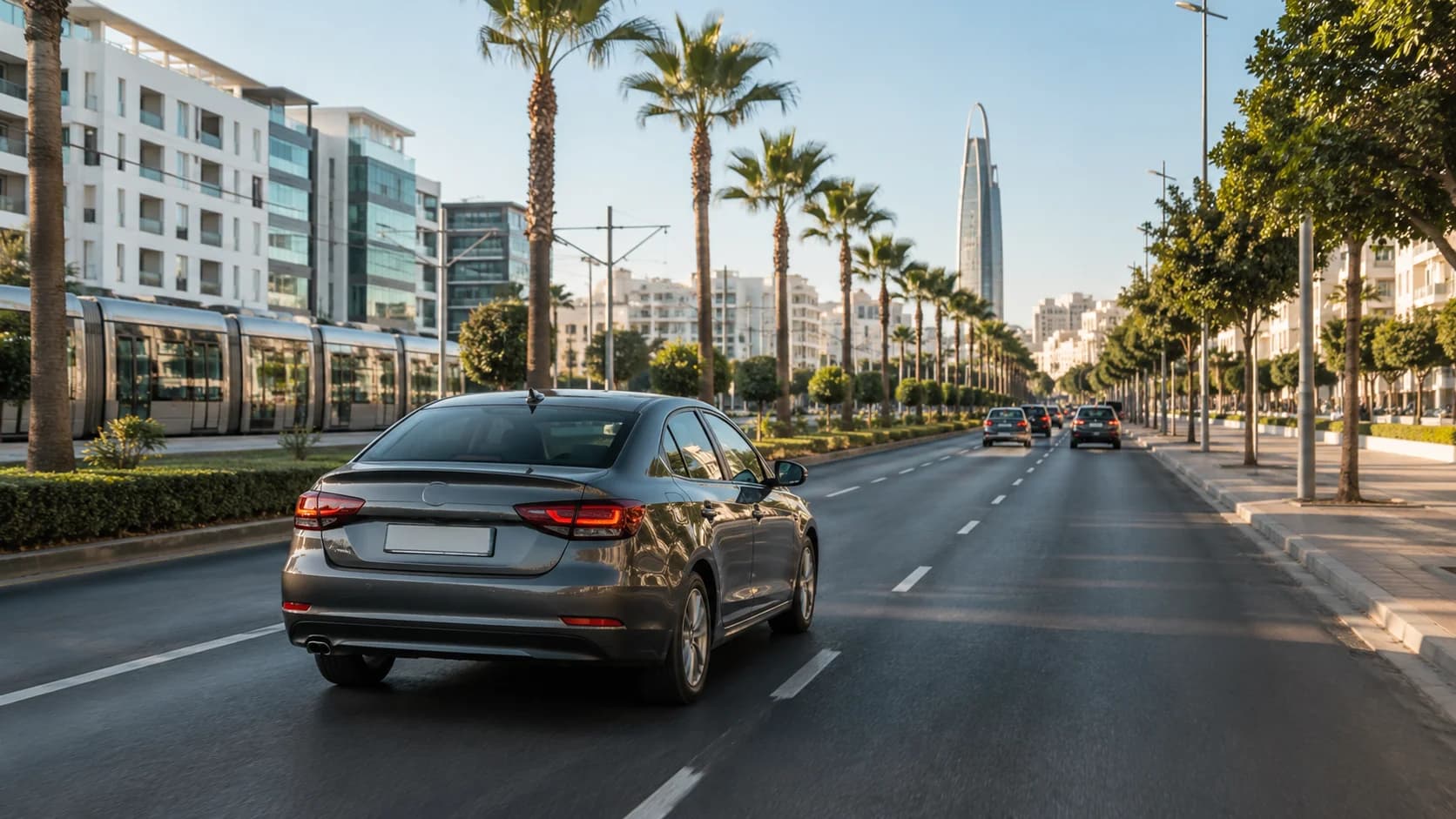
Rabat is one of the best Moroccan cities for tourists who want to get used to local driving without jumping straight into the intensity of Casablanca. The capital still has traffic, scooters, pedestrians and large junctions, but the overall rhythm is more predictable. Roads around the main avenues are generally wider, roundabouts are easier to read and drivers tend to move with less pressure than in Morocco’s busiest commercial cities.
This makes Rabat a useful place to build confidence before longer drives to Casablanca, Kenitra, Meknes or the Atlantic coast. If you are renting a car for the first time in Morocco, Rabat gives you enough real city driving experience without feeling too chaotic from the first minute.
The key is to stay calm, drive on the right, avoid sudden lane changes and treat every roundabout as a place to slow down before making a decision. Morocco drives on the right-hand side, and local driving guidance also notes that vehicles already engaged in a roundabout are usually given priority unless road signs or traffic lights say otherwise.
Roundabout right-of-way in Morocco
The most important rule for tourists is simple: approach slowly and read the signs, markings and traffic lights first. In many Moroccan roundabouts, vehicles already inside the roundabout have priority. That means you wait before entering, join only when there is a safe gap and continue smoothly once you are inside.
However, Morocco roundabout rules can feel confusing because not every junction works the same way. Some larger roundabouts are controlled by traffic lights. In that case, follow the lights first, even if the traffic flow feels different from a normal roundabout. Some small junctions may also rely on priority from the right or local road markings, so never assume that every circle works exactly the same.
For visitors, the safest habit is to combine the rule with observation. Look left for vehicles already circulating, check the entry lanes beside you, watch for scooters and only move when your path is clear. Do not rush because the car behind you honks. A short pause is better than entering without understanding the flow.
Lane choice on multi-lane roundabouts
Lane choice is where many tourists make mistakes. A multi-lane roundabout can look simple from outside, but once you enter, exits can arrive quickly. The best approach is to decide your exit before you join.
For the first exit, stay in the right lane. Signal early and leave smoothly. For straight-ahead exits, the right lane is often the easiest choice unless road markings suggest another lane. For left exits or full turns, use the inner lane only if you are confident and there is enough space to return to the right lane before leaving.
The golden rule is this: never cut across lanes at the last second. If you miss your exit, stay calm and go around again. This is much safer than forcing a diagonal move across another car, scooter or taxi.
When driving roundabouts in Rabat, tourists should also keep extra space around buses, taxis and delivery vehicles. Larger vehicles need more room, and local drivers may adjust their lane position quickly. Keep your speed steady, avoid racing beside them and let the situation open before you change lane.
Positioning to exit safely
A safe exit starts before the exit. Once you know where you need to leave, move gradually toward the outside lane. Use your indicator, check mirrors and look over your shoulder if needed. Scooters can appear in small gaps, especially near busy junctions and commercial streets.
Do not stop inside the roundabout unless traffic or lights require it. Sudden stops confuse drivers behind you. Instead, reduce speed gently, keep your line and exit when clear. If another driver is pushing from behind, ignore the pressure and focus on space in front and beside you.
Tourists often feel they need to be fast to match local traffic. In Rabat, it is better to be predictable. A driver who signals early, keeps a steady line and avoids sudden moves is easier for everyone to read.
Rabat's busiest junctions to know
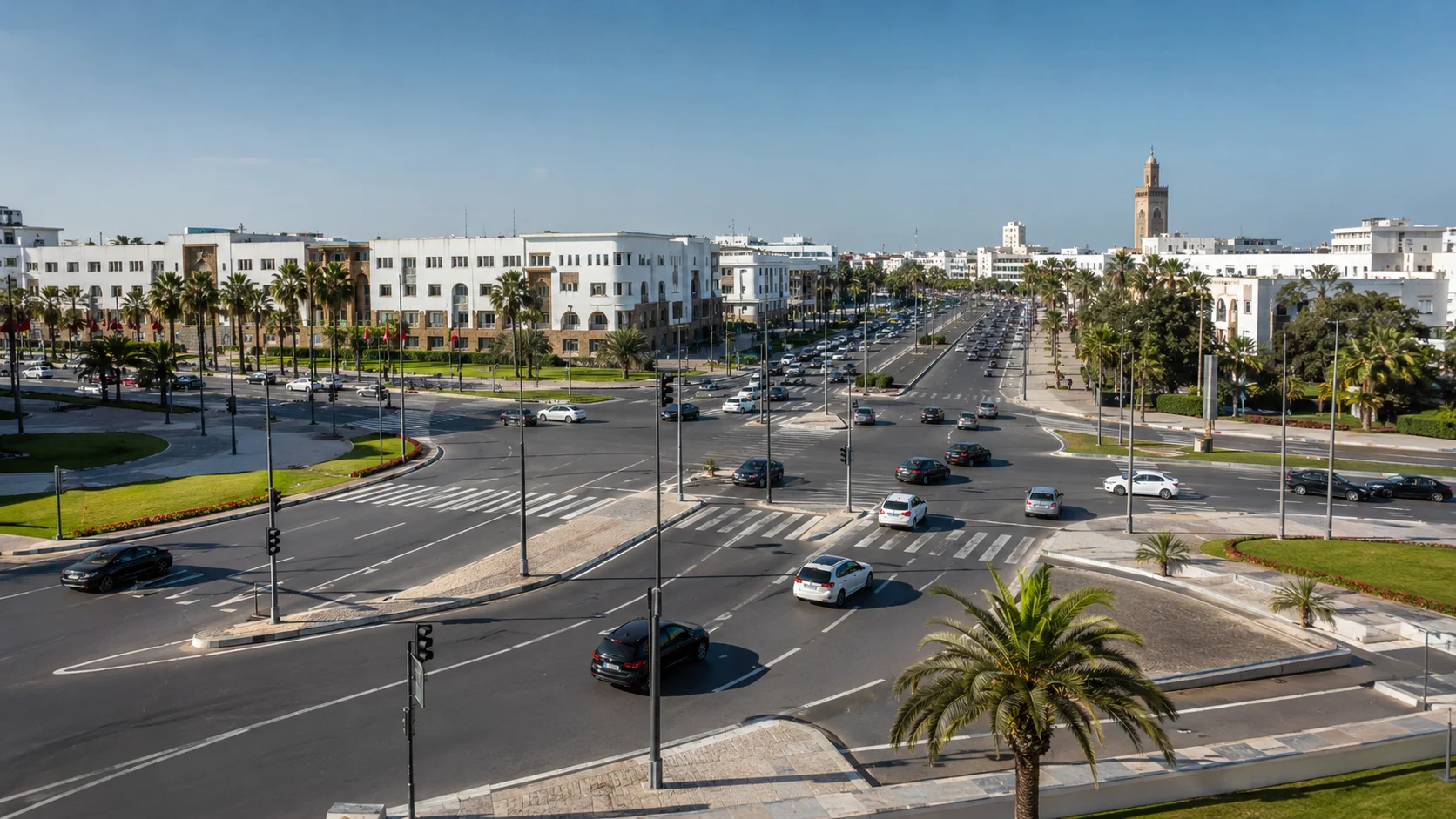
Rabat is calmer than Casablanca, but some junctions still need attention. Areas around Bab el-Had can feel busy because of pedestrians, taxis, tramway movement, shops and medina-edge traffic. This is not the place to rush. Keep your speed low, expect people to cross and avoid changing lanes late.
Large avenues such as Avenue Mohammed V and Avenue Hassan II can also feel wide and active, especially near traffic lights and turning points. The challenge here is not usually chaos, but lane discipline. Choose your lane early and avoid drifting between lanes while checking your navigation.
Roads near administrative areas, train stations and main commercial streets can also become slow during peak times. Rabat traffic tips for tourists are mostly about patience: stay in your lane, leave space and do not fight for every gap.
If you are using GPS, listen early rather than waiting for the final instruction. Many wrong moves happen because the driver realizes too late that the exit or turn is coming.
Reading local driving behaviour
Driving in Rabat for tourists becomes easier when you understand that local traffic is highly interactive. Drivers may inch forward, flash lights, use the horn or make eye contact to show intention. This does not always mean aggression. Often, it is just communication.
You should not copy every local habit. Instead, read the message and respond calmly. If a taxi edges forward, slow slightly and decide whether it is safer to let it go. If a scooter moves between lanes, hold your position rather than swerving. If a driver honks, check your mirrors and surroundings before reacting.
The most useful defensive driving habits are simple. Keep both hands ready, scan ahead, leave extra space near pedestrians and avoid emotional reactions. The safest tourist driver in Rabat is not the fastest one. It is the one who gives clear signals and makes calm decisions.
Indicators, horns and eye contact
Indicators matter in Rabat, especially around roundabouts and junctions. Use your indicator before exiting a roundabout, before changing lane and before turning into side streets. Even if not every local driver signals perfectly, you should. It helps other road users understand your movement.
The horn is more common in Morocco than in some European or North American countries. A short beep may mean “I am here,” “watch out” or “I am passing.” It is not always anger. Treat it as information, not as a personal attack.
Eye contact can also help at low speed. At a tight junction, a quick look can show whether another driver or pedestrian has seen you. Still, do not rely only on eye contact. Use brakes, lane position and signals first.
At night, be extra careful with lights, reflections and scooters. Slow down before junctions and avoid assuming another driver has seen your indicator.
The easiest car for nervous drivers
If you are nervous about Rabat junctions, choose a car that makes city driving easier. A small hatchback is often the best option because it is simple to park, easy to position in lanes and less stressful in tight traffic. For many travelers, a light hatchback rental Rabat option is enough for city driving, hotel transfers and short coastal routes.
Budget also matters. If you want a simple city car without paying for size you do not need, cheap car rental Rabat can be the most practical choice. A compact car is easier to handle around Bab el-Had, busy avenues and hotel parking areas.
If you prefer more comfort for longer drives, luggage or family travel, a sedan rental Rabat gives more space while still feeling manageable in city traffic. The best choice depends on your confidence, group size and route.
Automatic transmission can also help nervous drivers. It lets you focus on mirrors, signs, lane position and pedestrians instead of gear changes. This is useful in stop-start traffic and multi-lane roundabouts.
Building confidence in your first hour
Your first hour behind the wheel matters. Do not begin with the busiest route if you can avoid it. Start with a simple drive around wider streets, hotel areas or less crowded avenues. Get used to the car’s steering, mirrors, brakes and turning circle before dealing with the busiest junctions.
Before moving off, set your GPS, adjust mirrors and understand the basic controls. Know where the indicators, hazard lights, parking brake and gear selector are. If you are renting the car, ask the local team to explain anything unfamiliar before you leave.
Drive slowly at first. There is no need to prove anything. Stay in the right lane when practical, avoid unnecessary overtaking and give yourself more time than the GPS suggests. After a few roundabouts, the pattern becomes easier: slow down, read the flow, enter clearly, hold your lane, signal and exit.
Confidence comes from repetition. Once you handle a few Rabat junctions calmly, the city starts to feel much more manageable.
FAQ
Who has right of way on a roundabout in Morocco?
In many Moroccan roundabouts, vehicles already inside the roundabout have priority unless signs, markings or traffic lights indicate another rule. Always slow down and check the actual flow before entering.
Is driving in Rabat hard for tourists?
Rabat is usually one of the easier Moroccan cities for tourists to drive in. It is calmer than Casablanca, but you still need to watch roundabouts, scooters, pedestrians and busy junctions.
How do Rabat roundabouts work?
Most Rabat roundabouts work by slowing down before entry, yielding to circulating traffic when required, choosing the correct lane and signaling before your exit. Large roundabouts may also have traffic lights.
Which side of the road does Morocco drive on?
Morocco drives on the right-hand side of the road. Overtaking is generally on the left, and roundabouts circulate counterclockwise.
Is Rabat easier to drive than Casablanca?
Yes, for most tourists Rabat feels easier than Casablanca. The traffic rhythm is calmer, roads feel more organized and junctions are generally less intense.
Do I need to use indicators on roundabouts in Morocco?
Yes. Use your indicator before exiting a roundabout and before changing lane. Clear signaling makes your driving easier for local drivers to understand.
What's the best car for nervous drivers in Rabat?
A small hatchback is usually the best car for nervous drivers in Rabat. It is easy to park, simple to position and less stressful in tight city traffic.
Is an automatic easier in Rabat traffic?
Yes. An automatic car can make Rabat traffic easier because you can focus on road position, mirrors, pedestrians and junctions instead of changing gears.
How do I handle a busy multi-lane junction?
Slow down early, choose your lane before the junction, avoid sudden lane changes and follow road markings or traffic lights. If you miss a turn, continue safely and reroute.
Are there many roundabouts in Rabat?
Yes, Rabat has many roundabouts and large junctions, especially around main avenues, medina-edge areas and administrative districts. Most are manageable if you drive slowly and predictably.
Ready to Drive Rabat with Less Stress?
A light, easy-to-park hatchback takes the stress out of city junctions. Choose your car from MarHire Car Rabat with full insurance, clear pricing, WhatsApp support and free hotel or airport delivery, then start your Rabat drive with a vehicle that feels simple from the first roundabout.