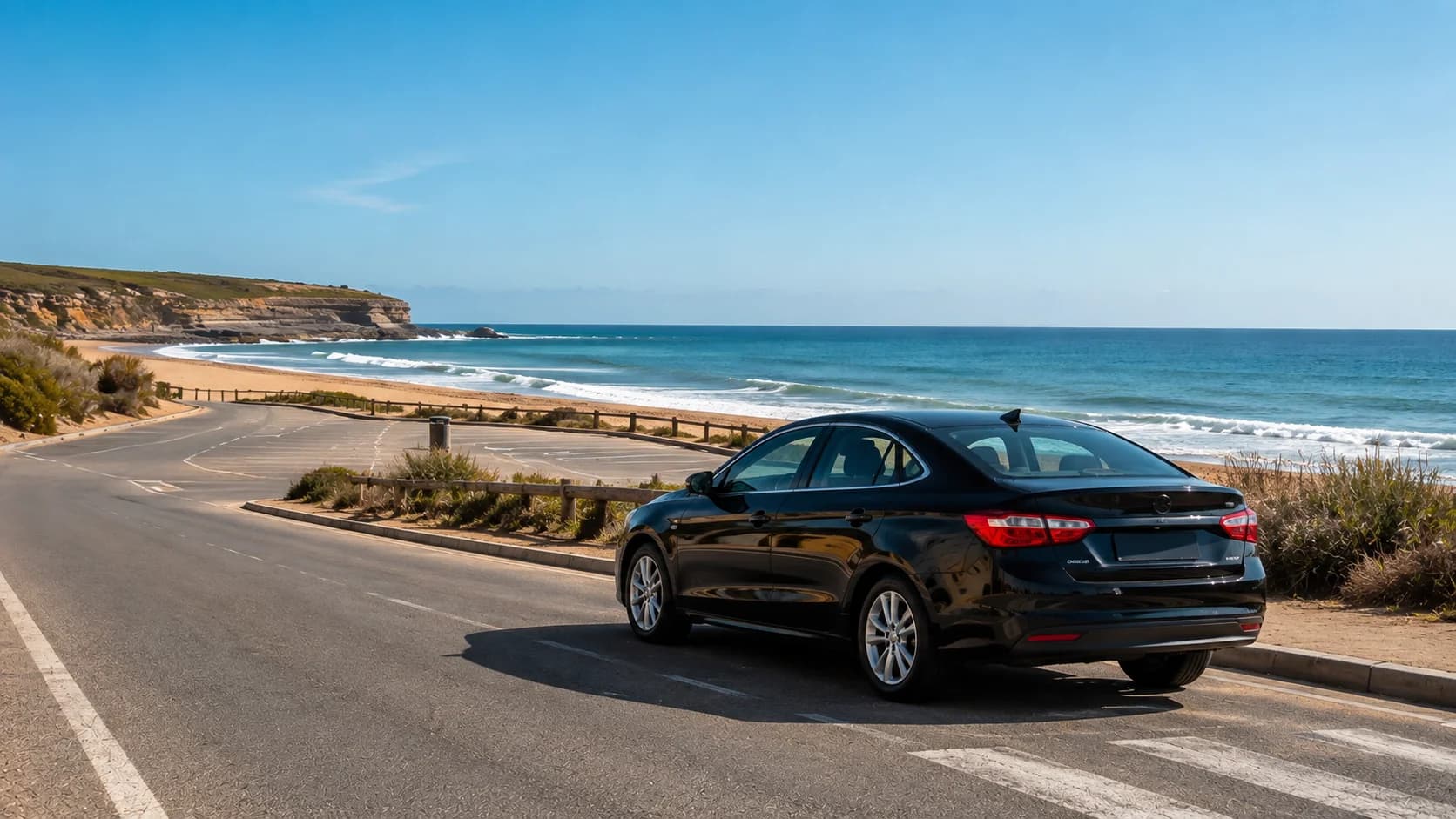









Rabat may be Morocco’s administrative capital, but its Atlantic coastline gives the city a relaxed side that is easy to miss if you stay only around the main monuments. The Rabat Corniche connects ocean views, historic walls, sandy beaches and the mouth of the Bouregreg River, creating one of the capital’s most enjoyable areas for a scenic drive.
With a rental car, you can explore the Rabat seafront at your own pace, stop for coffee beside the water, visit Oudayas Beach and remain until sunset without depending on taxi availability. The route is not long, but it offers enough viewpoints, promenades and nearby attractions to fill several hours.
Table of Contents
- Rabat’s Atlantic edge
- Driving the Corniche
- Oudayas Beach and the river mouth
- Cafés, surf and sea views
- Sunset and photo stops
- Parking along the seafront
- Best time to drive the coast
- Best car for the seafront
- Frequently asked questions
Rabat’s Atlantic Edge
Rabat sits where the Bouregreg River reaches the Atlantic Ocean. This meeting point between river and sea gives the capital a varied waterfront, with sandy sections, rocky coastal views, historic fortifications and modern promenades.
The most recognizable part of the area is the beach below the Kasbah of the Oudayas. Official tourism information describes Rabat Beach as a sandy stretch at the mouth of the Bouregreg, directly below the kasbah. The wider beachfront has cafés, restaurants, water-sports facilities and public amenities.
The seafront feels different from Rabat’s formal avenues and government districts. Locals come here to walk, exercise, surf, fish, meet friends or simply sit beside the ocean. For visitors, it provides a pleasant break after exploring the medina, Hassan Tower or the city’s museums.
Driving is especially useful because the waterfront is spread across several connected areas. You can move between the Atlantic Corniche, Oudayas Beach, the river mouth and viewpoints overlooking Salé without trying to fit everything into a single walking route.
Driving the Rabat Corniche
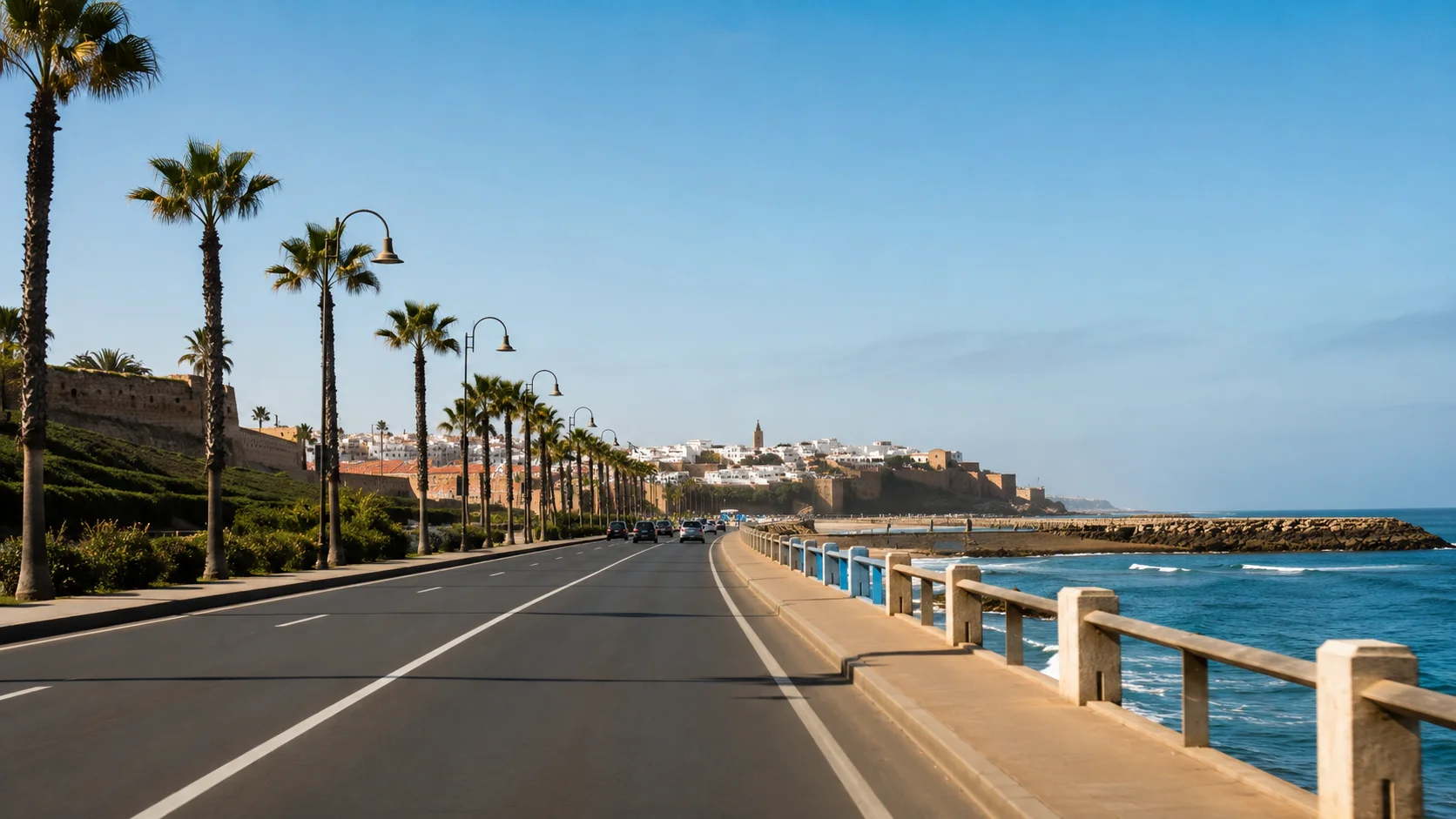
The Rabat Corniche is better understood as a coastal zone rather than one isolated attraction. It includes roads and promenades facing the Atlantic, together with the developed waterfront near the Bouregreg River.
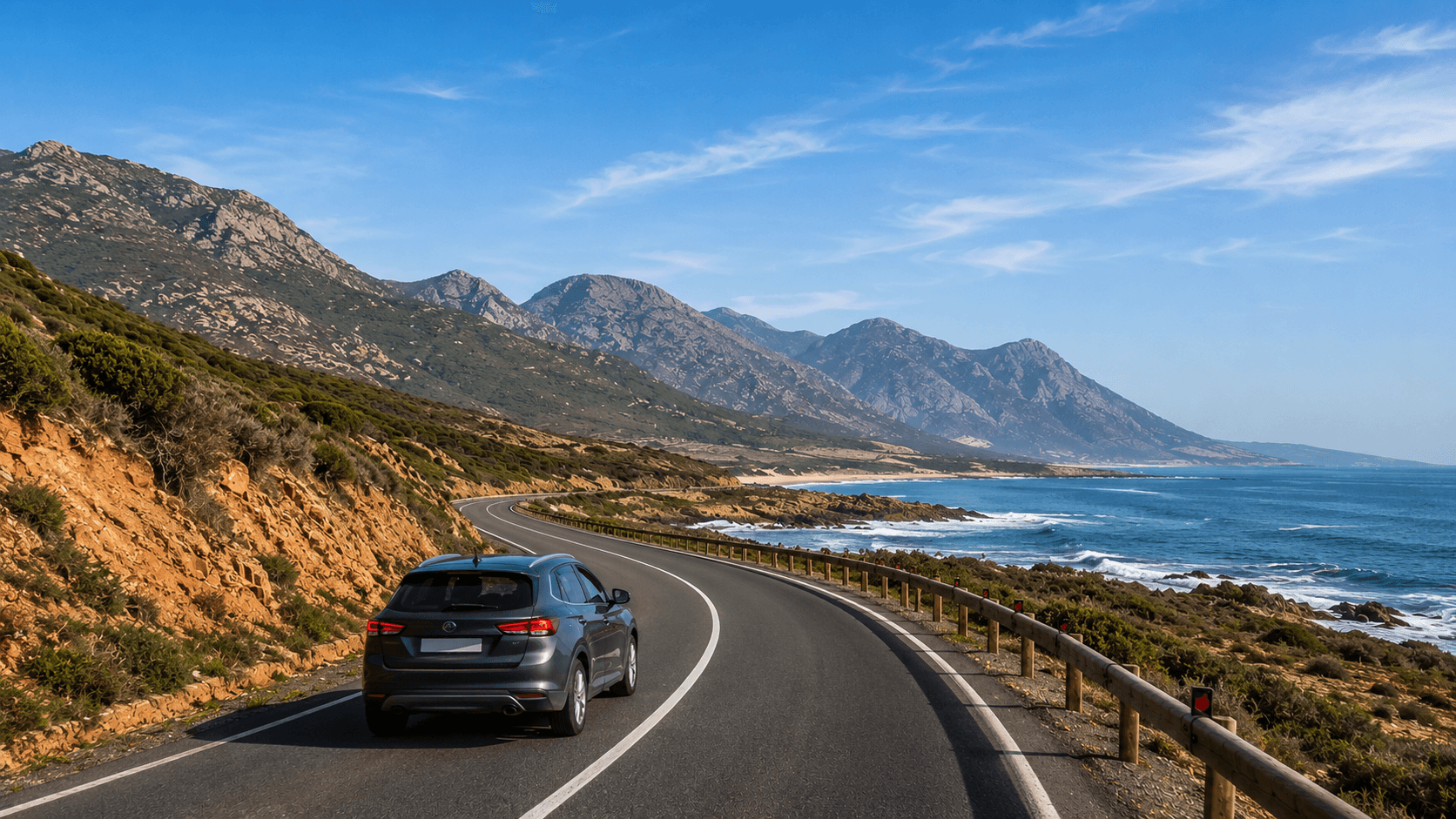
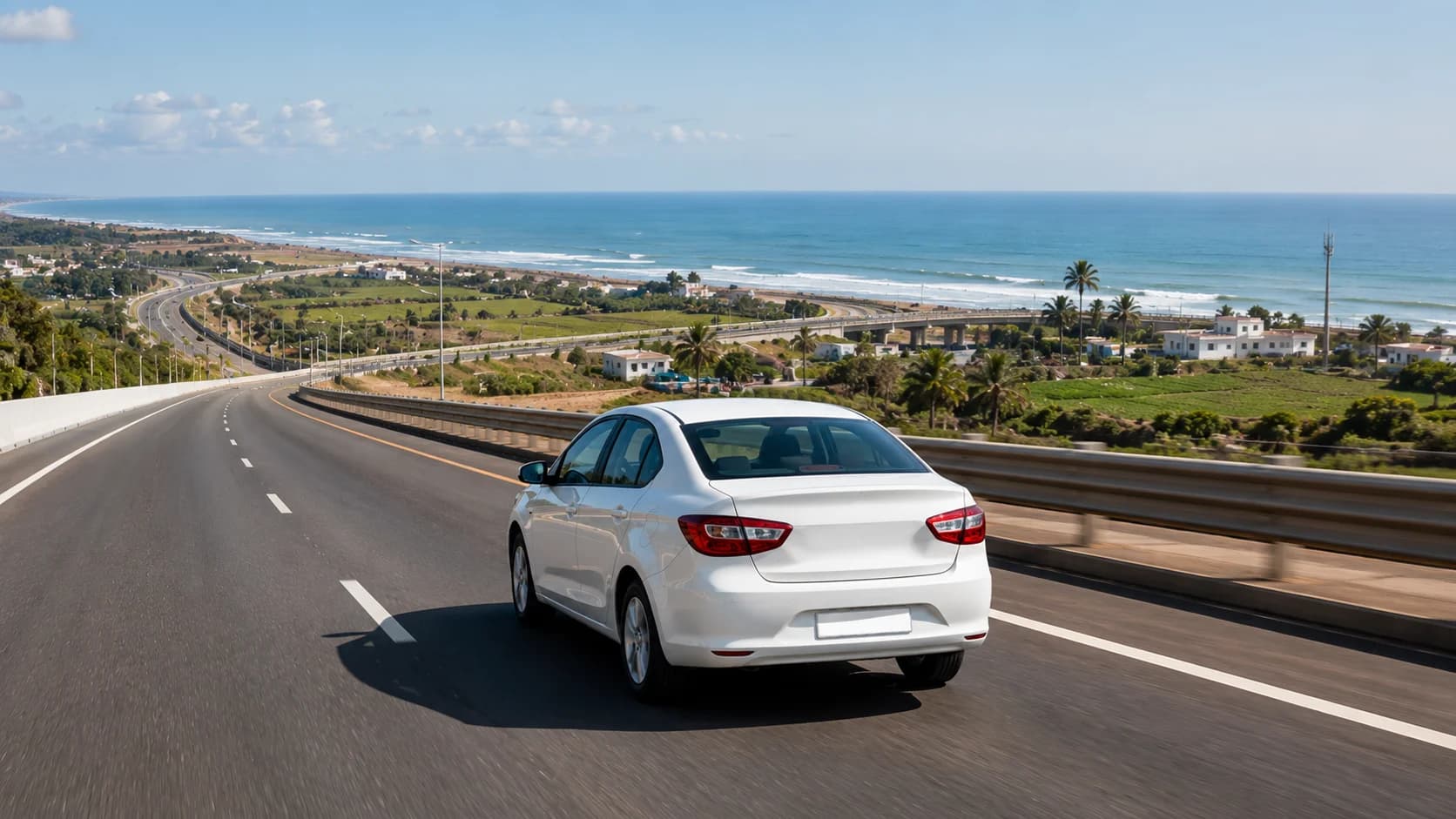
A relaxed coastal drive can begin west of the historic centre and continue toward the Oudayas and river mouth. Along the way, the scenery alternates between open ocean, rocky shoreline, beach access points and urban neighbourhoods.
Keep your speed moderate even when traffic is light. Coastal roads can have pedestrians crossing toward cafés, viewpoints and beach entrances. Runners, cyclists and parked vehicles may also reduce the available space, particularly in the late afternoon.
Navigation applications are useful for reaching a specific stop, but avoid following directions into narrow medina streets. It is normally easier to leave the car near the outer walls and continue on foot when visiting the Kasbah of the Oudayas or Rabat’s old medina.
The drive itself can be completed quickly without stops. However, the best experience comes from treating it as a flexible half-day outing. Allow time for a beach walk, a drink beside the ocean and an unhurried sunset stop.
Oudayas Beach and the Bouregreg River Mouth
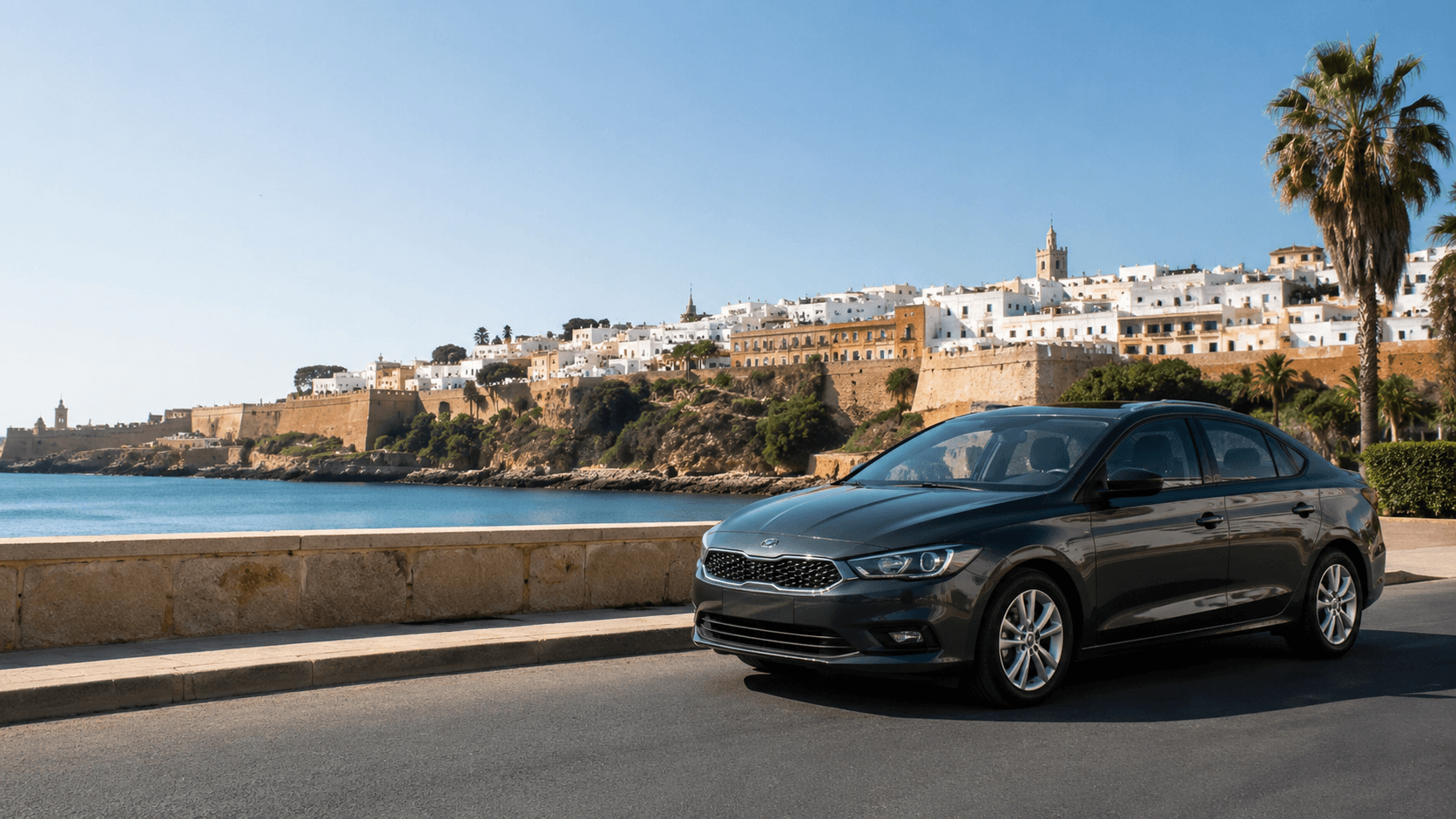
Oudayas Beach, also commonly called Rabat Beach, lies below the Kasbah of the Oudayas beside the Bouregreg river mouth. Its setting is what makes it special. From the sand, you can see the historic kasbah rising above the beach while the river separates Rabat from neighbouring Salé.
The beach is worth visiting even when you are not planning to swim. You can walk beside the water, observe local fishing activity or climb toward the kasbah for a higher view of the estuary.
Conditions can change with the tide, waves and season. The Atlantic may be powerful, so pay attention to local safety signs and instructions before entering the water. Families should supervise children closely and choose calmer, clearly designated areas.
After the beach, walk up toward the Oudayas. The kasbah’s elevated platforms provide wide views over the river mouth, Atlantic coast and Salé. This is one of the best places to understand Rabat’s geography, especially around late afternoon when the light becomes softer.
Across the river, Bouregreg Marina occupies the Salé side of the estuary. The waterfront includes a yacht harbour and places to eat or drink beside the water. The marina is sheltered from the stronger Atlantic waves and faces several important landmarks on the Rabat side.
Cafés, Surf and Sea Views
The Rabat seafront is not only a sightseeing route. It is part of everyday life in the capital. People visit for morning walks, casual meals, surfing sessions and evening gatherings.
Café choices range from simple local spots to modern waterfront venues. Rather than planning the entire drive around one specific café, it can be easier to choose a place after seeing which section of the coast is busiest and where parking is available.
For the widest ocean views, look for seating facing the Atlantic rather than the river. For a calmer setting with boats and city lights, continue toward the Bouregreg waterfront and marina area.
Rabat also has an established surfing community. Waves near the capital can attract experienced local surfers, although conditions are not equally suitable every day. Beginners should book with a professional surf school instead of entering unfamiliar waves alone.
Even without surfing, watching the activity from the promenade can be part of the experience. In windy weather, bring a light jacket because the seafront can feel noticeably cooler than central Rabat.
Sunset and Photo Stops
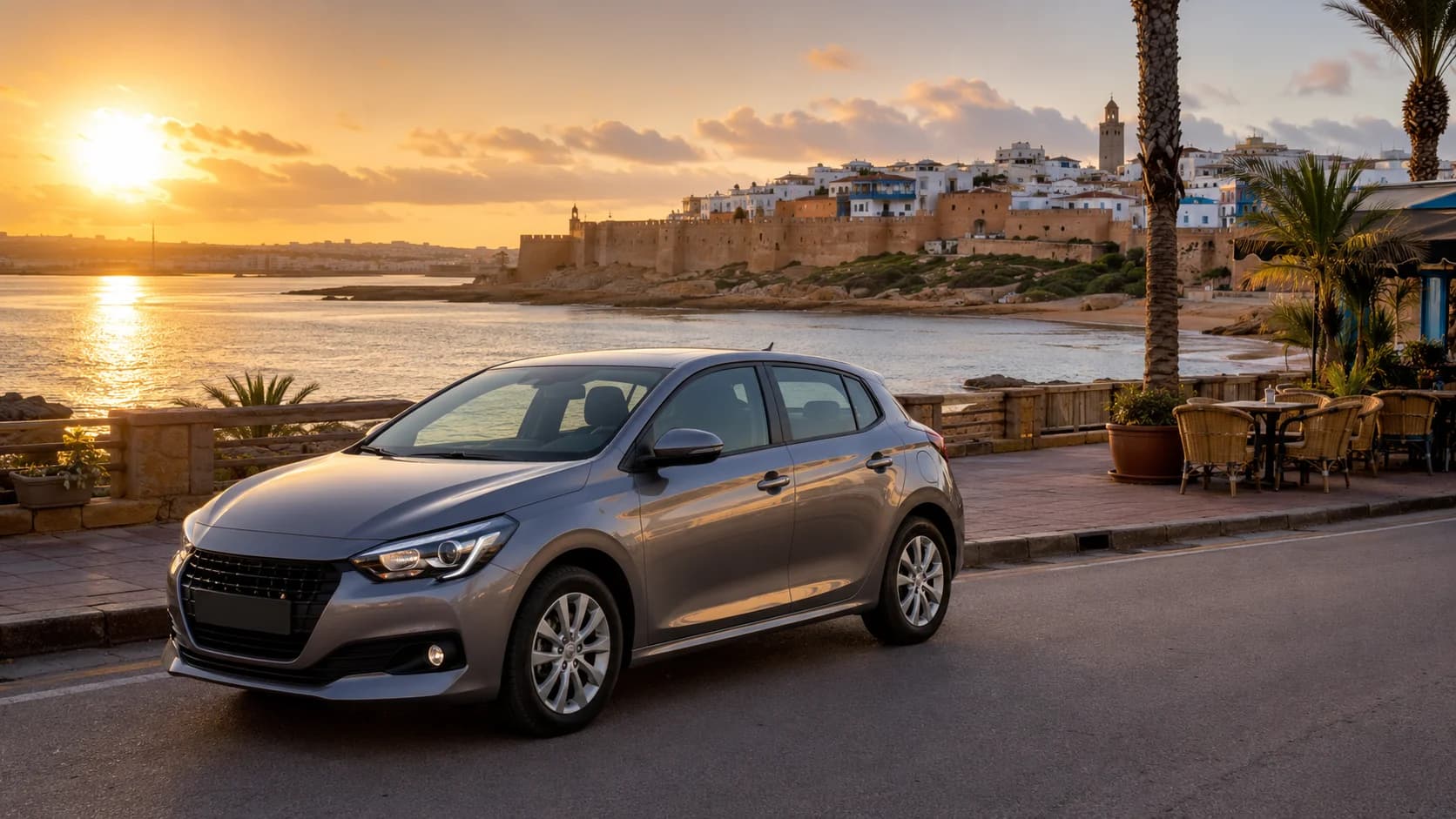
Golden hour is one of the best times to explore the Rabat Corniche. The low sunlight warms the kasbah walls, reflects across the Bouregreg and creates a clear horizon over the Atlantic.
The Oudayas viewpoints are among the most impressive sunset locations. From the elevated area near the kasbah, you can photograph the beach, river mouth, boats and coastline in a single scene.
The promenade below the historic walls offers a lower perspective. This area works well for photographs of the river and Salé waterfront, particularly when boats are crossing the Bouregreg.
Open sections of the Atlantic Corniche are better for an unobstructed sunset. Park legally, walk away from the traffic and choose a safe viewpoint rather than stopping beside the road.
Photography is often easier on weekdays because promenades and popular viewpoints may become crowded during weekends and holidays. Arriving 30 to 45 minutes before sunset gives you enough time to park, choose a viewpoint and enjoy the changing light without rushing.
Avoid leaving cameras, luggage, phones or other valuables visible inside the car while you explore on foot. Place anything unnecessary in the boot before reaching the parking area.
Parking Along the Rabat Seafront
Parking conditions vary considerably along the Rabat seafront. Some sections have marked roadside spaces, while the busiest attractions may require you to park farther away and walk.
Around Oudayas Beach and the medina, spaces can fill quickly during sunny afternoons, summer weekends and sunset hours. Trying to park directly beside the entrance may waste time. A practical approach is to accept a legal space several minutes away and complete the final section on foot.
Look carefully for signs, painted curbs and access restrictions. Do not block residential entrances, pedestrian crossings or narrow lanes. When a parking attendant is present, confirm the expected parking charge before leaving the vehicle.
Parallel parking skills are useful because many spaces are located along the street. A compact rental car makes this much easier, particularly close to the kasbah and older neighbourhoods.
For the Bouregreg Marina, remember that it is situated on the Salé side of the river. Driving there requires crossing to Salé rather than simply continuing along the Rabat bank. The marina is positioned opposite the Kasbah of the Oudayas and close to the river mouth.
If you plan to visit both sides, allow additional time for city traffic and the river crossing.
Best Time to Drive the Coast
The Rabat Corniche can be visited throughout the year, but the atmosphere changes by season and time of day.
Morning is ideal for a quiet drive, easier parking and a peaceful walk. The air is usually fresh, and cafés are less crowded than later in the day. Morning light also works well for views facing the river and kasbah.
Late afternoon is the most atmospheric period. Temperatures become more comfortable, local families begin arriving and the coast gradually shifts into sunset colours. The disadvantage is heavier traffic and greater competition for parking.
Summer weekends are generally the busiest. Leave extra time, especially around beach entrances and popular promenades. During quieter months, the coastline feels calmer, but Atlantic wind and changing weather can make it cooler than expected.
For the best balance, visit on a weekday in the late afternoon. Begin the drive before the main sunset rush, stop near Oudayas Beach and finish at a west-facing viewpoint.
Avoid planning a tight schedule immediately afterward. Traffic around the beach, medina and riverfront can move slowly when the area is busy.
Best Car for the Rabat Seafront
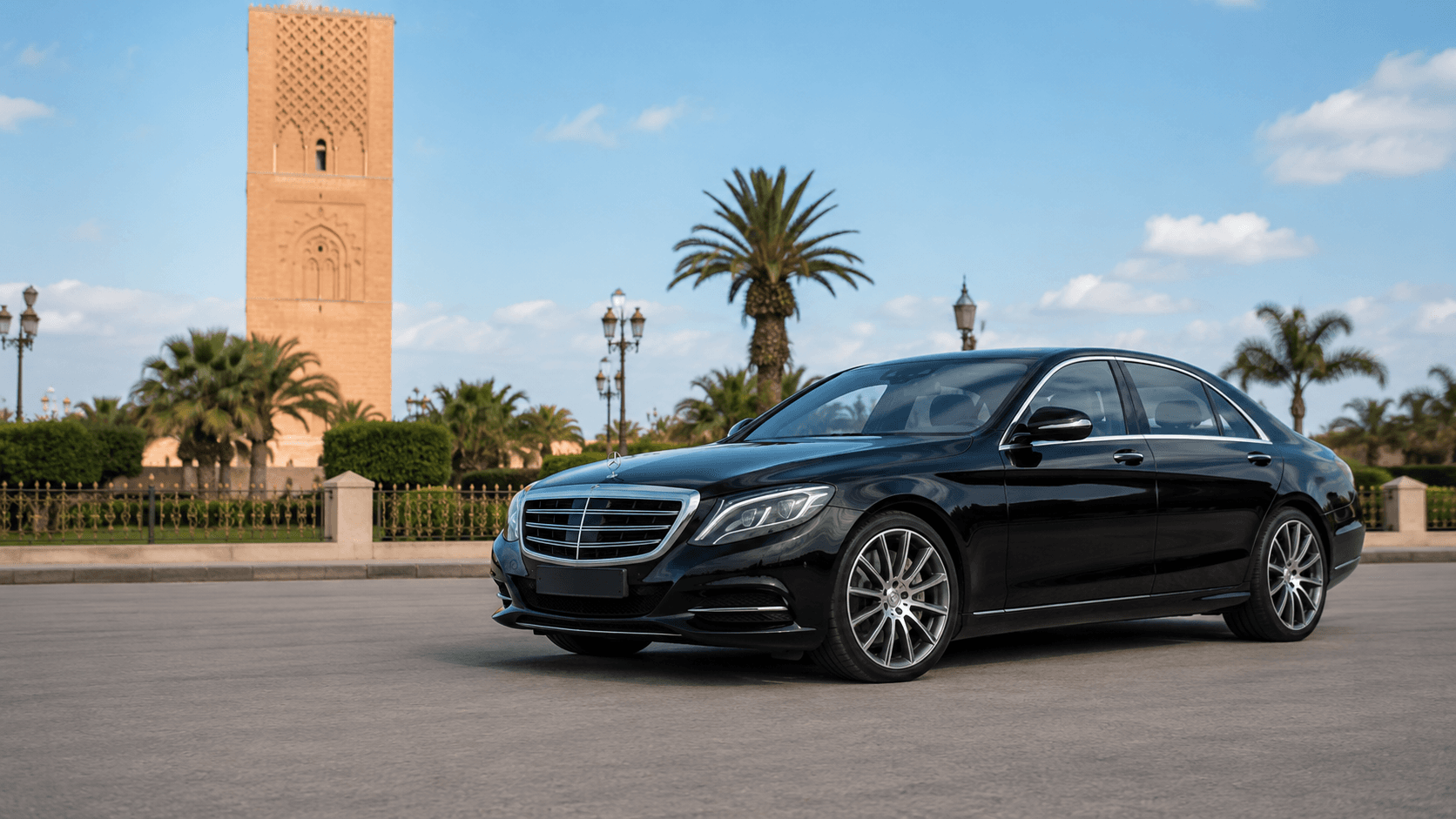
You do not need a large or powerful vehicle for the Rabat Corniche. The route is urban, paved and relatively compact, making an economical hatchback or comfortable sedan the most practical option.
A small car is easier to park near the beach, medina and busy café areas. It is also economical for travellers who plan to combine the seafront with short city trips.
Travellers looking for an affordable vehicle can compare cheap car rental in Rabat options for a simple coastal outing. These cars are well suited to city driving and short distances.
A sedan rental in Rabat offers additional boot space and comfort, making it a good choice for couples, business travellers or families carrying beach bags and luggage.
An SUV rental in Rabat may be useful for larger groups or travellers continuing beyond the capital, but it is not necessary for the seafront itself. Larger vehicles can also be less convenient when parallel parking near busy coastal attractions.
Whichever category you choose, check that the air conditioning works properly and that you are comfortable with the vehicle’s dimensions before entering crowded areas.
Frequently Asked Questions
Does Rabat have a beach?
Yes. Rabat Beach, often associated with Oudayas Beach, is located below the Kasbah of the Oudayas near the mouth of the Bouregreg River.
What is the Corniche in Rabat?
The Rabat Corniche is the city’s coastal and waterfront area, including roads and promenades facing the Atlantic and sections near the Bouregreg River.
Can you surf in Rabat?
Yes, surfing is possible around Rabat when conditions are suitable. Beginners should use a recognized surf school and follow local safety advice.
Where can I watch the sunset in Rabat?
Popular options include the Oudayas viewpoints, sections of the Atlantic Corniche and open coastal promenades with west-facing views.
Is Oudayas Beach worth visiting?
Yes. Its location below the historic kasbah and beside the river mouth makes it one of Rabat’s most distinctive coastal stops.
Is parking easy on the Rabat seafront?
Parking is usually easier during weekday mornings. It can become difficult near Oudayas Beach and popular viewpoints on sunny afternoons, weekends and holidays.
What is the best time to drive the Corniche?
Late afternoon on a weekday offers pleasant light and the chance to see the sunset. Morning is better for lighter traffic and easier parking.
Can I drive along the Rabat seafront?
Yes. Much of the coastal area is accessible by car, although you may need to park and walk to reach beaches, promenades and historic viewpoints.
Where are the best seafront cafés?
You will find cafés around the Atlantic-facing Corniche, near Oudayas Beach and along the Bouregreg waterfront. Choose according to whether you prefer ocean views or a calmer marina setting.
What car is best for the coast?
A compact economy car or sedan is the easiest option. Both are comfortable for paved city roads and easier to park than a large SUV.
Explore Rabat’s Coast with MarHire Car Rabat
Cruise the capital’s coast at golden hour with an easy, economical rental car from MarHire Car Rabat. Free hotel delivery gives you the flexibility to explore the Rabat Corniche, Oudayas Beach and the Bouregreg river mouth whenever the mood strikes.
Start with an afternoon drive, stop for coffee beside the Atlantic and finish above the beach as the sun sets over the water. With your own car, Rabat’s seaside is not just another attraction. It becomes a relaxed part of your stay.