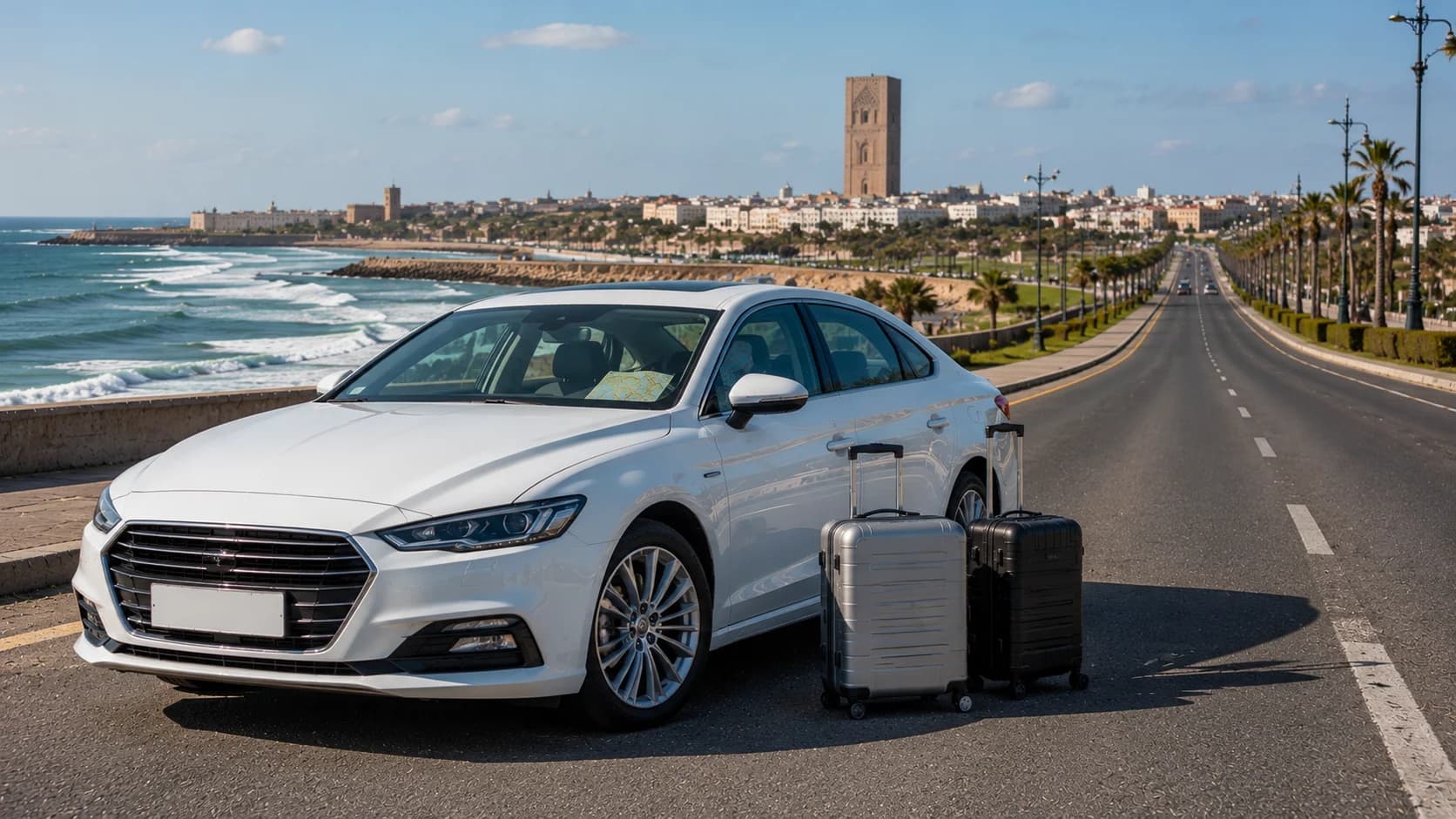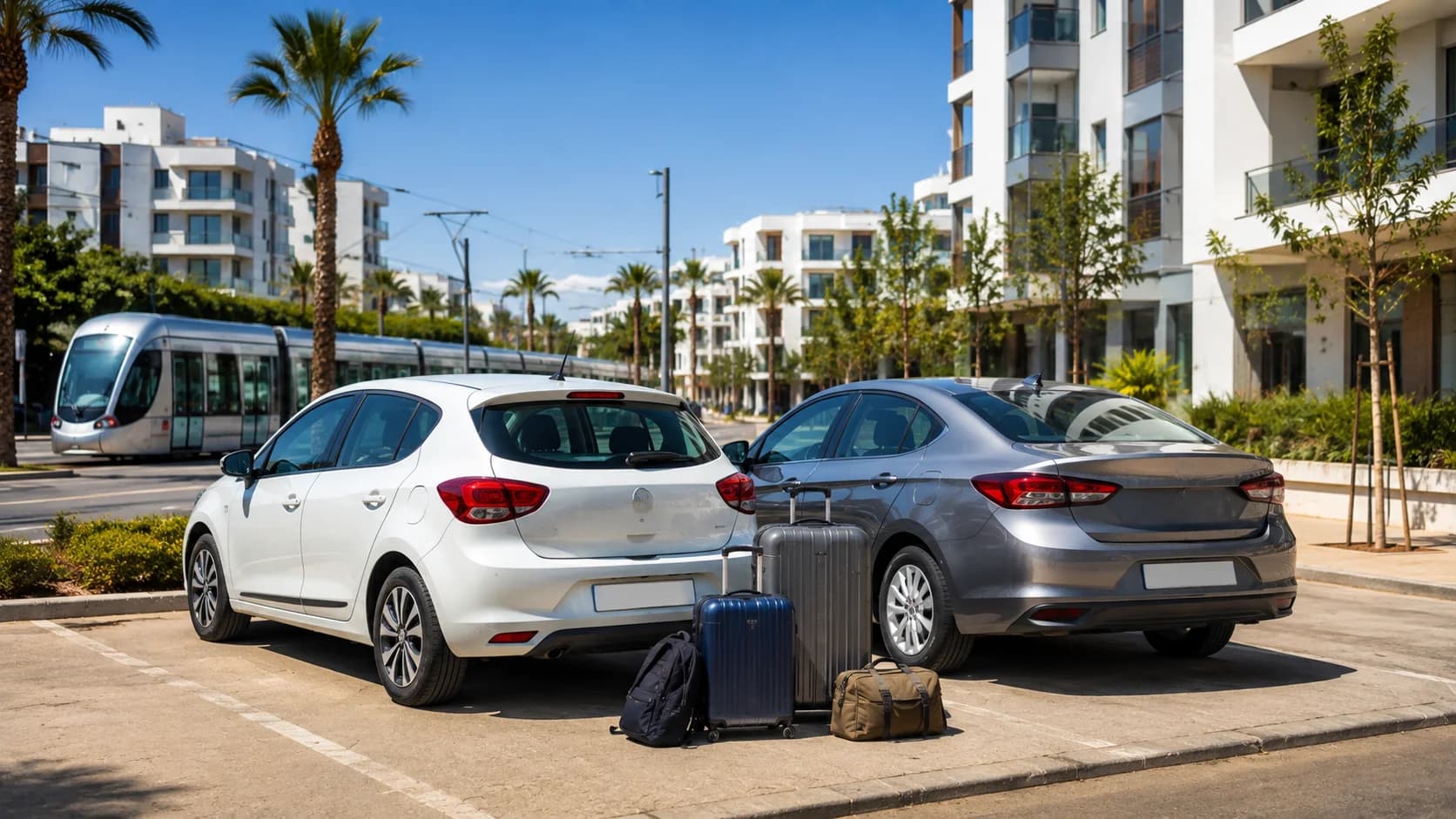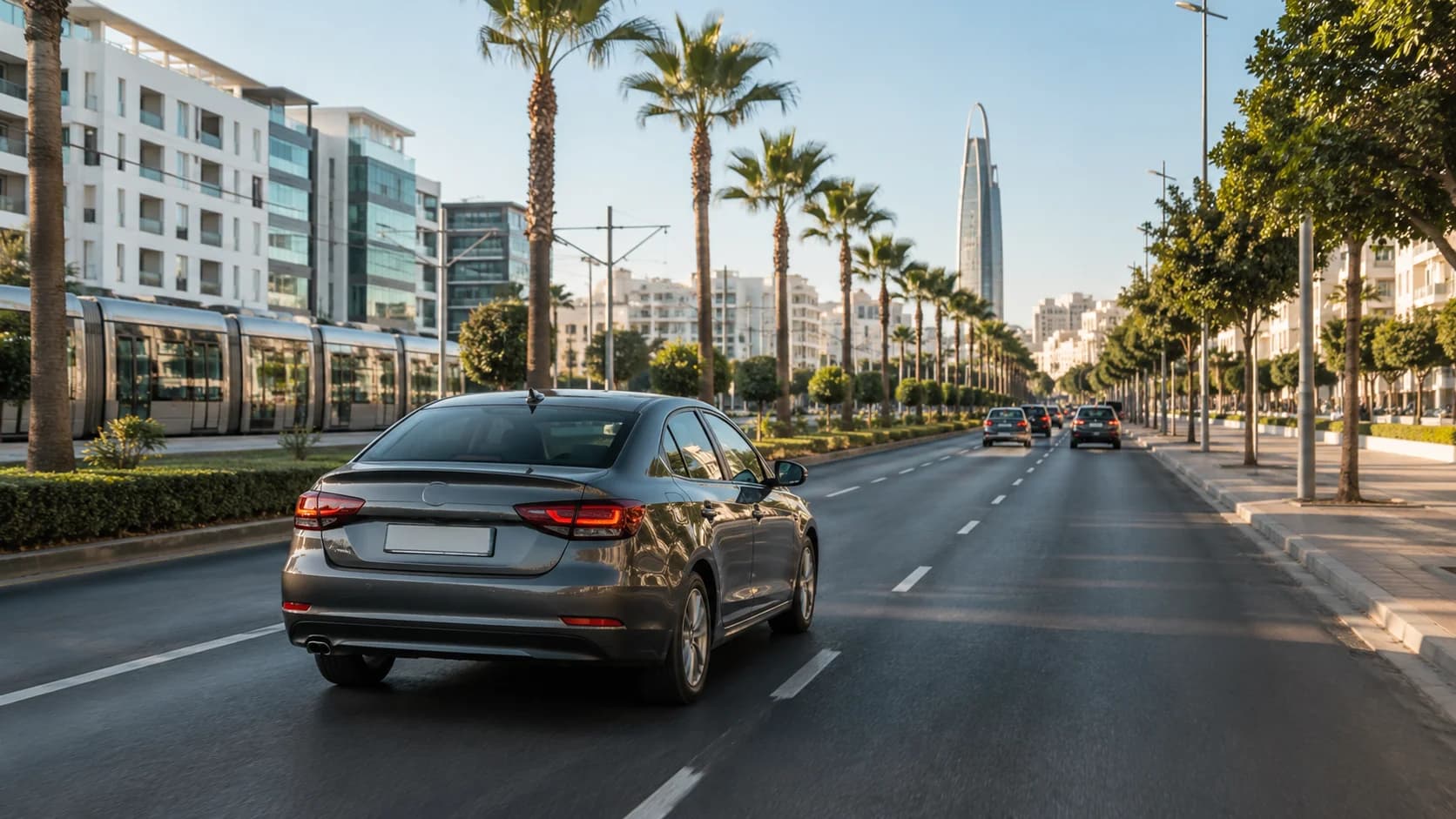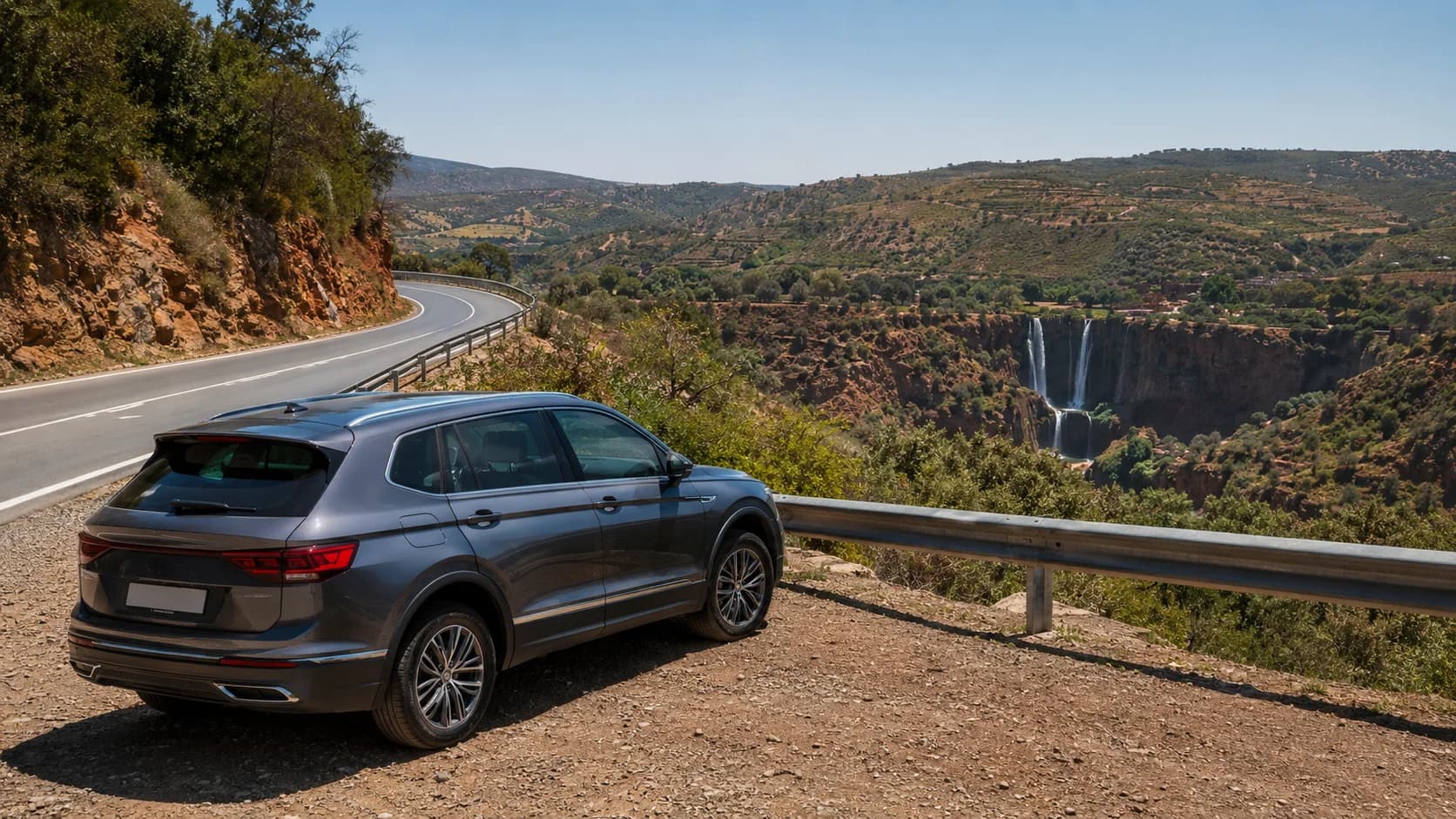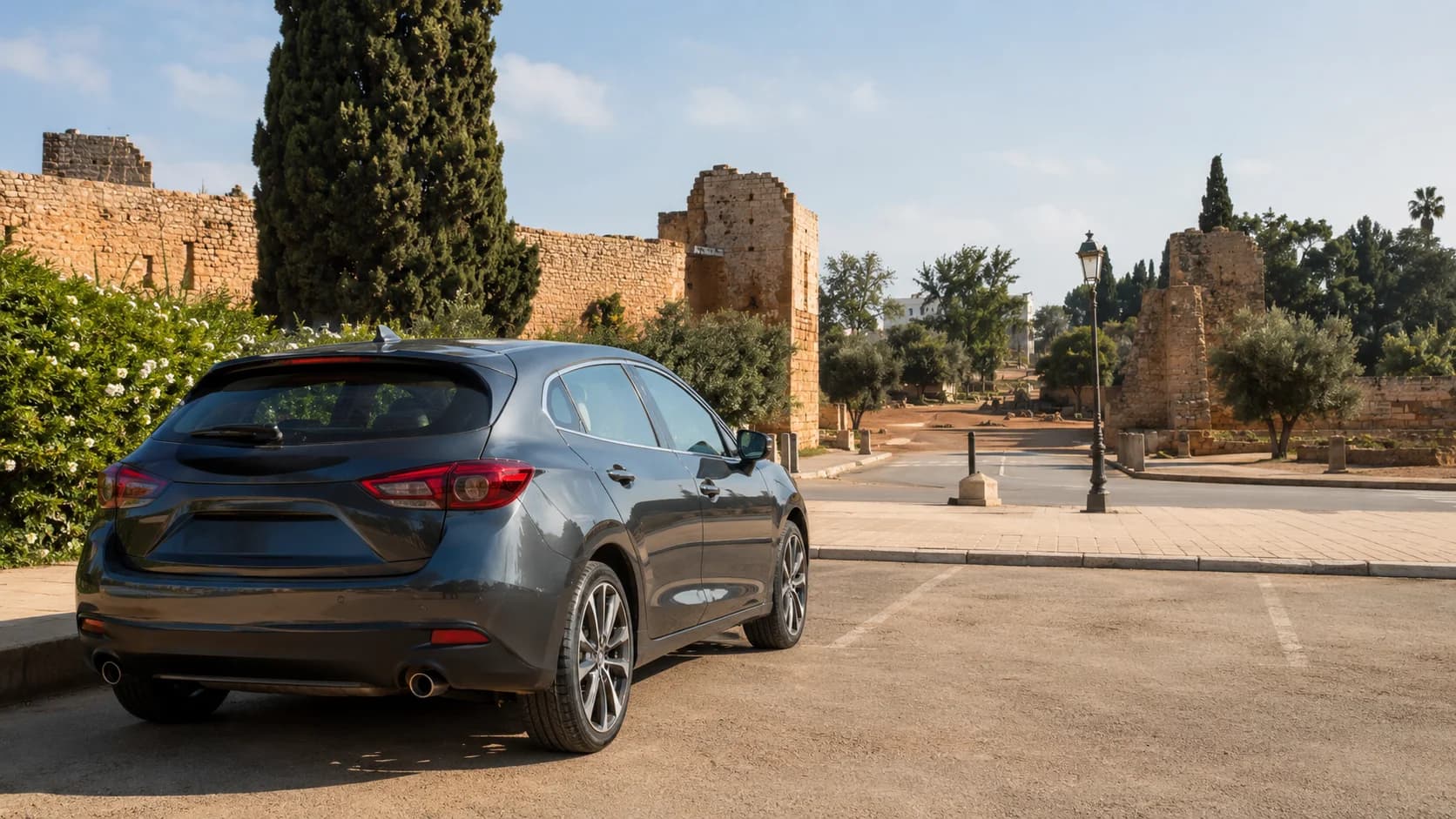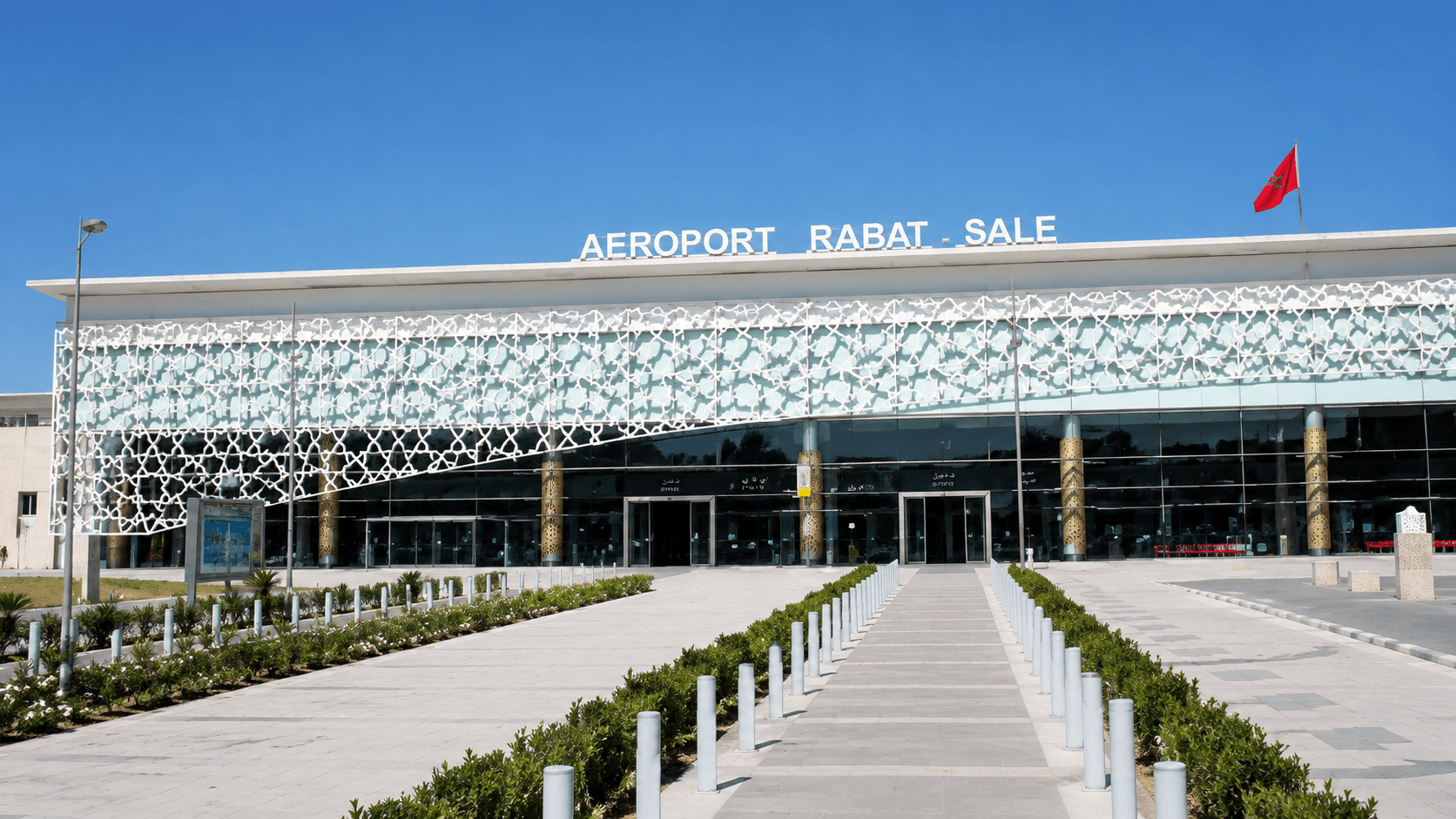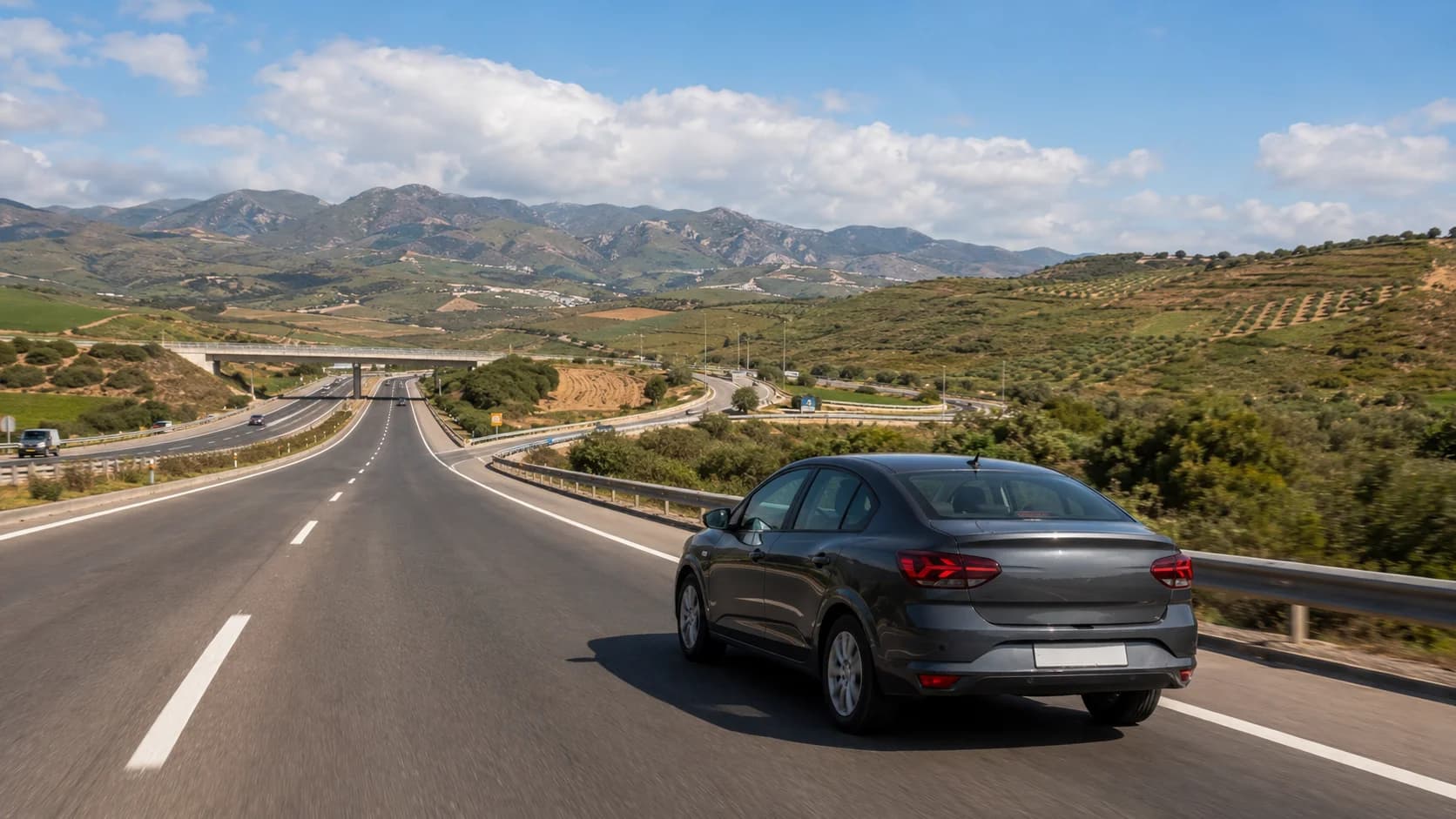






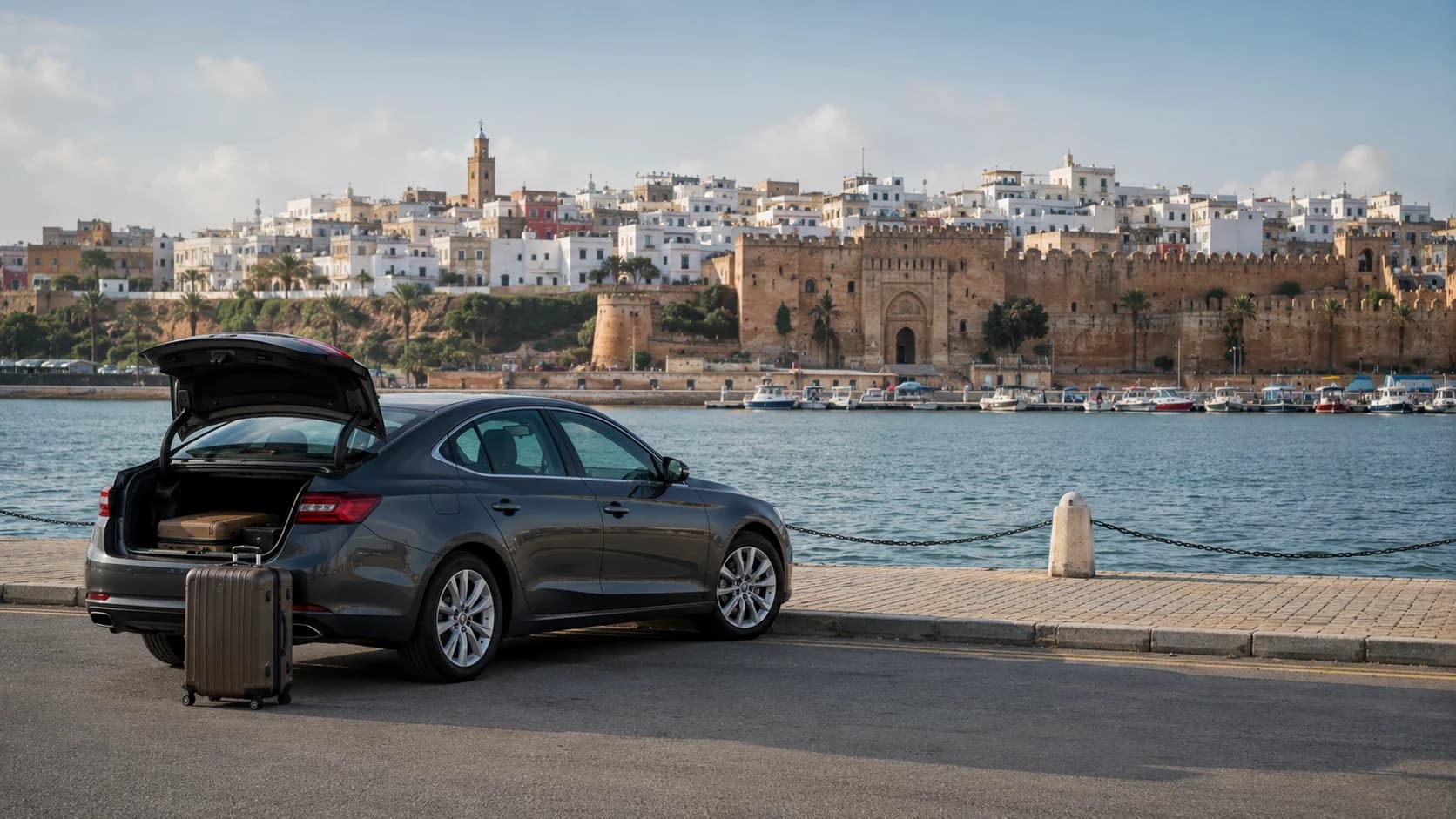
Salé is one of the easiest half-day trips from Rabat by car. Just across the Bouregreg River, it offers a historic medina, old city gates, religious monuments, a modern marina and Atlantic beaches within a short driving loop. A compact car, hatchback or sedan is ideal because distances are short, traffic can build near bridges, and parking is easier with a smaller vehicle.
Table of Contents
- Rabat's older twin across the river
- Crossing the Bouregreg by car
- The Salé medina and Bab Lamrissa
- The Grand Mosque and madrasa
- The marina and waterfront cafés
- Salé's beaches
- Parking on the Salé side
- Best car for the two-city loop
- FAQs
Rabat's Older Twin Across the River
Many visitors stay in Rabat and see Salé only from the other side of the river. That is a mistake. Salé is not just a suburb of the capital. It is a historic city with its own medina, ramparts, gates, religious architecture, marina and Atlantic coastline.
Located on the right bank of the Bouregreg estuary, facing Rabat, Salé has deep roots going back to the 11th century and developed strongly under the Almohad and Merinid dynasties. Today, Visit Rabat describes the two cities as a complementary urban ensemble connected by history, daily life and the river itself.
Exploring Salé Morocco by car is especially convenient because the city works well as part of a two-bank itinerary. You can start in Rabat, cross the Bouregreg, visit the Salé medina, stop near Bab Lamrissa, continue to the marina, and then finish with a beach drive north of the city.
For travelers who prefer flexibility, a car makes the experience easier than trying to fit every stop into taxi rides. You can move between the historic center, waterfront and beach areas at your own pace, especially if you are traveling with family, luggage, camera gear or beach bags.
Crossing the Bouregreg by Car
The Bouregreg River is what gives Rabat and Salé their twin-city character. It separates the capital from Salé, but it also connects them through bridges, tramway lines, waterfront promenades and daily local traffic.
By car, the crossing is usually short. Depending on your starting point in Rabat and the traffic around the bridges, the drive into Salé can take around 10 to 20 minutes. From central Rabat, the route toward the marina and Bab Lamrissa is one of the simplest ways to enter the Salé side.
The best approach is to avoid rushing the crossing during peak commuting hours. Morning and late-afternoon traffic can slow down near the main bridges, especially when people are moving between Rabat offices and Salé residential districts. If your plan is mainly sightseeing, late morning or early afternoon is more relaxed.
A good self-drive loop looks like this:
Rabat center → Bouregreg crossing → Bab Lamrissa → Salé medina → Grand Mosque and madrasa area → Bouregreg Marina → Salé Beach → Plage des Nations or return to Rabat.
This route keeps the day simple. It avoids unnecessary backtracking and lets you experience both the old and modern sides of Salé in one smooth drive.
The Salé Medina and Bab Lamrissa
The Salé medina is the historic heart of the city. It feels quieter and more local than the busiest parts of Rabat, which makes it interesting for travelers who want a more authentic old-city atmosphere. Visit Rabat highlights the medina, the Merinid madrasa, Bab El Mrissa and the Bouregreg Marina as must-see attractions in Salé.
Bab Lamrissa, also written Bab El Mrissa, is one of the city’s most famous gates. It is closely linked to Salé’s maritime identity and makes a strong starting point for a short walking visit. If you are exploring by car, park nearby rather than trying to drive deeply into narrow medina streets.
The medina itself is best explored on foot. Leave the car outside or close to a wider access road, then walk in slowly. You can see old walls, traditional streets, local shops and everyday Salé life. This is not a place to rush. The charm comes from small details: carved doors, shaded alleys, market sounds and glimpses of historic architecture.
For a simple first visit, plan 60 to 90 minutes for the medina and gate area. That gives enough time to walk, take photos and enjoy the atmosphere without turning the stop into a full-day visit.
The Grand Mosque and Madrasa
Salé’s religious architecture is one of the reasons the city deserves more attention from visitors staying in Rabat. The Grand Mosque of Salé and the Merinid madrasa are part of the city’s historic identity, and they show how important Salé was long before modern Rabat expanded around the estuary.
Non-Muslim visitors should be respectful around mosque areas and avoid entering spaces where access is restricted. Even from the outside, the architecture, walls and surrounding streets help you understand the city’s importance in Moroccan history.
The madrasa is especially interesting for travelers who enjoy Islamic architecture, old craftsmanship and quieter heritage sites. Its details are best appreciated slowly, so this stop works well after the medina rather than before it.
If you are driving, do not try to park directly beside every monument. In old cities, the easiest strategy is to park once near the medina edge and walk between nearby points. This saves time and reduces stress in narrow streets.
The Marina and Waterfront Cafés
After the old medina, the Bouregreg Marina gives you the opposite side of Salé: modern, open and relaxed. Located on the Salé bank of the Bouregreg River, the marina is described by Visit Rabat as a modern waterfront space lined with landscaped promenades, cafés and restaurants overlooking the water.
This is one of the easiest places to stop if you are doing a Rabat to Salé loop by car. The roads are wider, the atmosphere is calmer, and the waterfront views make it a good break between sightseeing stops.
The marina is also useful for families. After walking through the medina, you can sit for coffee, lunch or a cold drink while looking across the water toward Rabat. Sunset is one of the best times to visit because the light over the Bouregreg gives the area a softer, more scenic feel.
For a simple half-day route, visit the medina first, then move to the marina for a relaxed pause. If you are short on time, the marina and Bab Lamrissa area can be combined into one compact stop.
Salé's Beaches
Salé also has a coastal side. This is where having a car becomes more useful, because the beach areas are easier to reach when you are not depending on multiple taxis.
Salé Beach sits opposite Rabat, across the Bouregreg estuary, and is one of the most accessible seaside spots in the area. Visit Rabat notes that recent rehabilitation around the corniche has helped make the area more attractive for enjoying the Atlantic setting and sunset views.
For a wider beach escape, continue north to Plage des Nations. It is located about 15 km north of Rabat and is known for its long strip of golden sand, dunes and open coastal scenery.
This beach extension works best if you have more than half a day. For example, you can spend the morning around Salé medina and the marina, then drive north for a late-afternoon beach walk. Swimming conditions on Morocco’s Atlantic coast can vary, so always follow local advice and avoid risky water when waves or currents are strong.
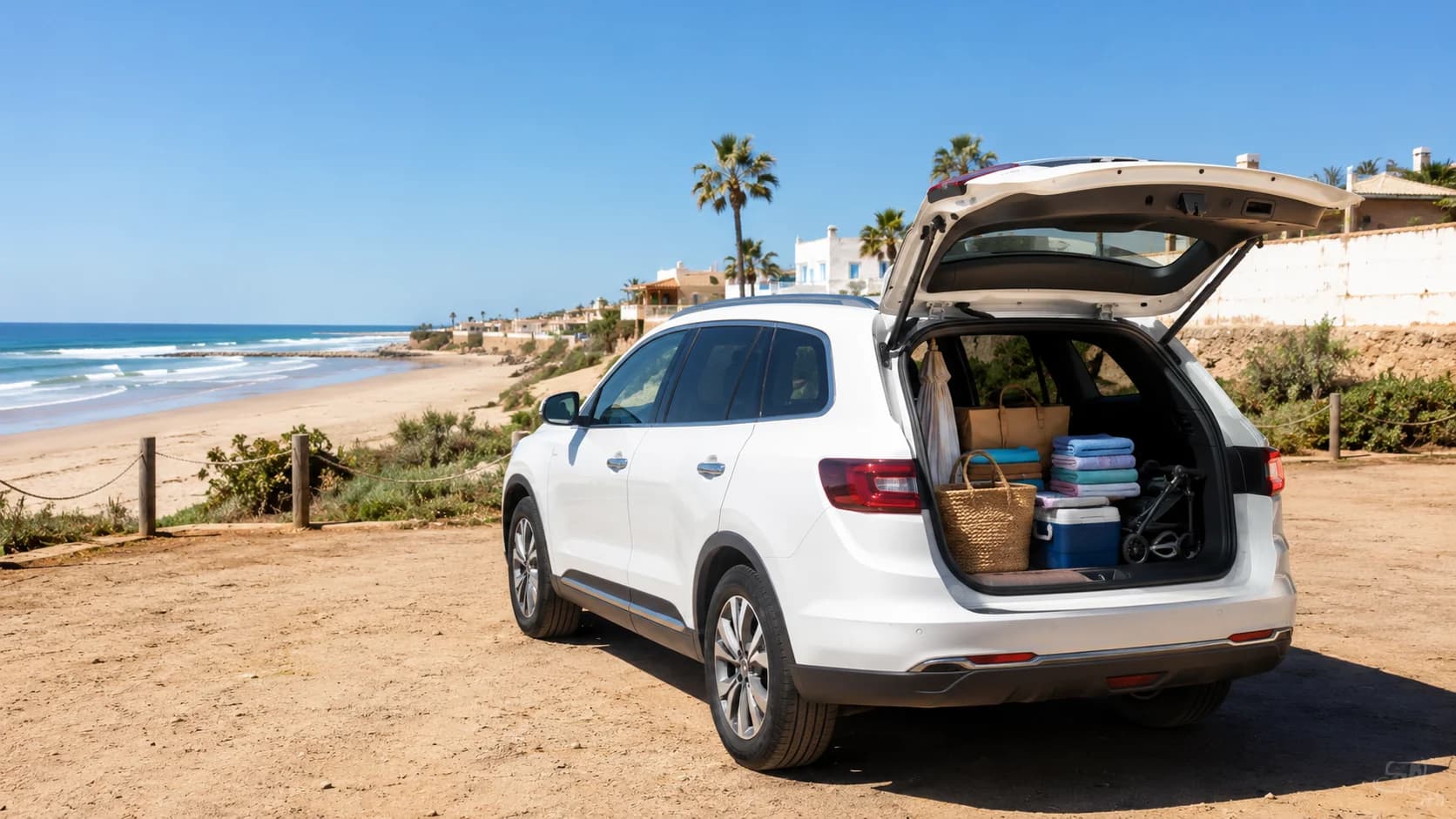
For families, beach bags and extra items, a car is much more practical than trying to manage the route by public transport.
Parking on the Salé Side
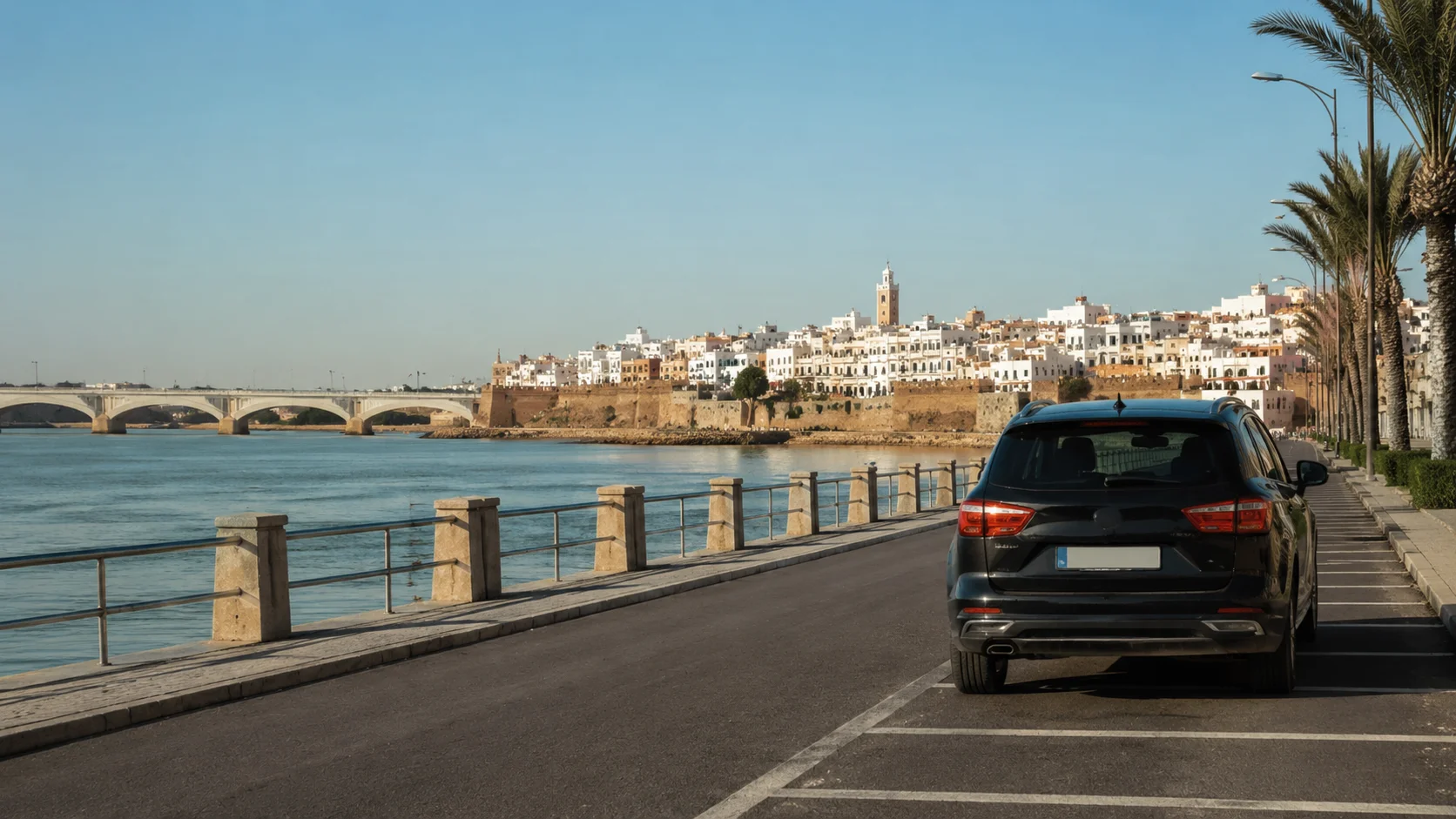
Parking in Salé is manageable if you choose the right areas. The main rule is simple: do not force the car into the tightest medina lanes. Use wider access roads, marked spaces or paid parking areas near the edge of the old city, then continue on foot.
For the medina and Bab Lamrissa, look for parking around the outside of the walls or near larger streets. For the marina, parking is usually easier because the area is more modern and designed for visitors. For the beach, parking depends on season and time of day, with summer weekends being the busiest.
A few practical tips help:
Arrive earlier for the medina if you want easier parking.
Use a compact vehicle if you are not used to Moroccan city traffic.
Avoid blocking shop entrances, garage doors or narrow corners.
Keep valuables out of sight before leaving the car.
Take a photo of where you parked if you are walking into the medina.
If you are staying in Rabat, free delivery can make the day even easier. You can receive the car at your hotel, riad or apartment, cross to Salé, explore both banks and return without losing time at a rental office.
Best Car for the Two-City Loop
The best car for exploring Rabat and Salé is not necessarily the biggest one. Because the route includes city traffic, bridge crossings, medina edges and parking near busy areas, smaller and mid-size vehicles are usually the most practical.
A cheap car rental Rabat option is ideal if you mainly want a budget-friendly car for short city drives, basic sightseeing and easy parking.
A hatchback rental Rabat is a smart choice for couples, solo travelers and small families who want something compact but comfortable enough for city and beach stops.
A sedan rental Rabat works better if you want more comfort, extra luggage space or a smoother drive for combining Salé with other nearby coastal areas.
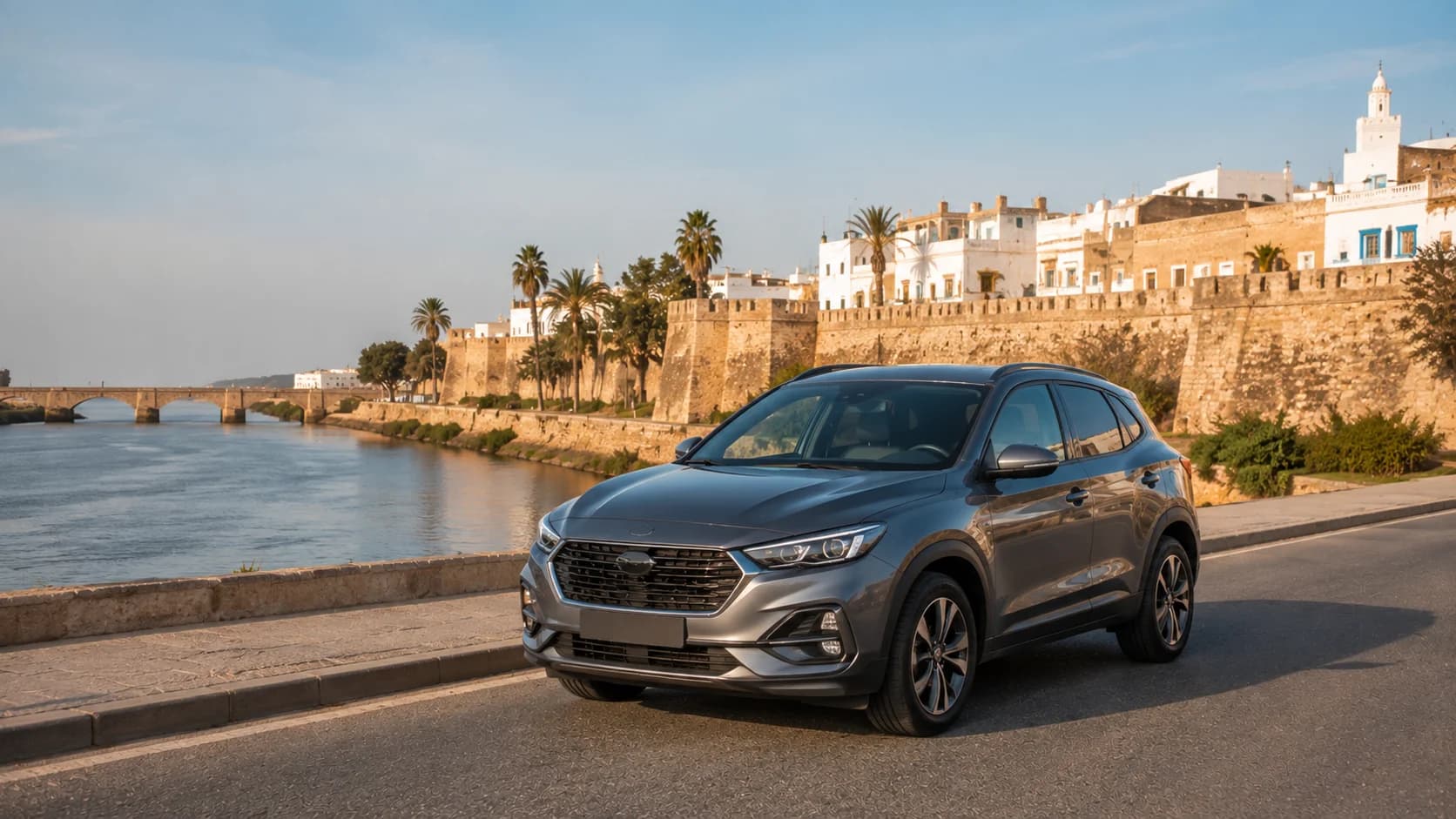
For this specific route, an SUV is usually not necessary unless you are carrying more luggage, traveling with a larger family or continuing beyond Salé toward longer regional drives. For the medina, marina and beach loop, simple is better.
Suggested Half-Day Itinerary
Start in Rabat after breakfast and drive toward the Bouregreg crossing. Enter Salé near Bab Lamrissa and park close to the medina edge. Spend around one hour walking through the old streets, then continue toward the Grand Mosque and madrasa area.
After the historic section, drive to Bouregreg Marina for lunch or coffee. This gives you an easy break with waterfront views before continuing to Salé Beach. If you still have time and want a wider Atlantic landscape, continue north toward Plage des Nations.
Return to Rabat before evening traffic becomes too heavy, or stay near the marina for sunset before crossing back.
This simple route gives you the best of Salé without making the day feel rushed.
FAQs
How do I get from Rabat to Salé?
The easiest way is to cross the Bouregreg River by car, tramway or taxi. By car, the drive from central Rabat to Salé is usually short, often around 10 to 20 minutes depending on traffic and your exact starting point.
Is Salé worth visiting?
Yes. Salé is worth visiting if you enjoy historic medinas, old gates, local atmosphere, waterfront views and less touristy city experiences. It pairs very well with Rabat because the two cities face each other across the Bouregreg.
Can I drive between Rabat and Salé easily?
Yes, driving between Rabat and Salé is straightforward, but traffic can build around the bridges during commuting hours. For sightseeing, late morning and early afternoon are usually more relaxed.
What is there to do in Salé?
The main things to do in Salé include visiting the medina, seeing Bab Lamrissa, exploring the Grand Mosque and madrasa area, walking around Bouregreg Marina and driving to Salé Beach or Plage des Nations.
Where do you park in Salé medina?
It is best to park near the outside of the medina walls or on wider surrounding streets, then continue on foot. Avoid driving deep into narrow medina lanes unless you know the area well.
Is the Salé medina safe for tourists?
The Salé medina is generally fine for a daytime visit, especially around the main streets and historic areas. As in any city, keep valuables secure, avoid isolated alleys at night and use normal travel awareness.
Are there beaches in Salé?
Yes. Salé has its own beach near the Bouregreg estuary, and Plage des Nations is a wider coastal option north of the city. A car makes it easier to combine the medina, marina and beach in one route.
How long do you need in Salé?
A half day is enough for the medina, Bab Lamrissa, the marina and a short beach stop. If you want to include Plage des Nations or enjoy a slow lunch by the waterfront, plan most of the day.
Is the marina worth visiting?
Yes. Bouregreg Marina is one of the easiest and most pleasant stops on the Salé side, especially for cafés, restaurants, sunset views and a calmer break after the medina.
What car suits exploring Rabat and Salé?
A compact car, hatchback or sedan is the best choice. These cars are easier to park, comfortable for short city drives and practical for crossing between Rabat, Salé, the marina and the beach.