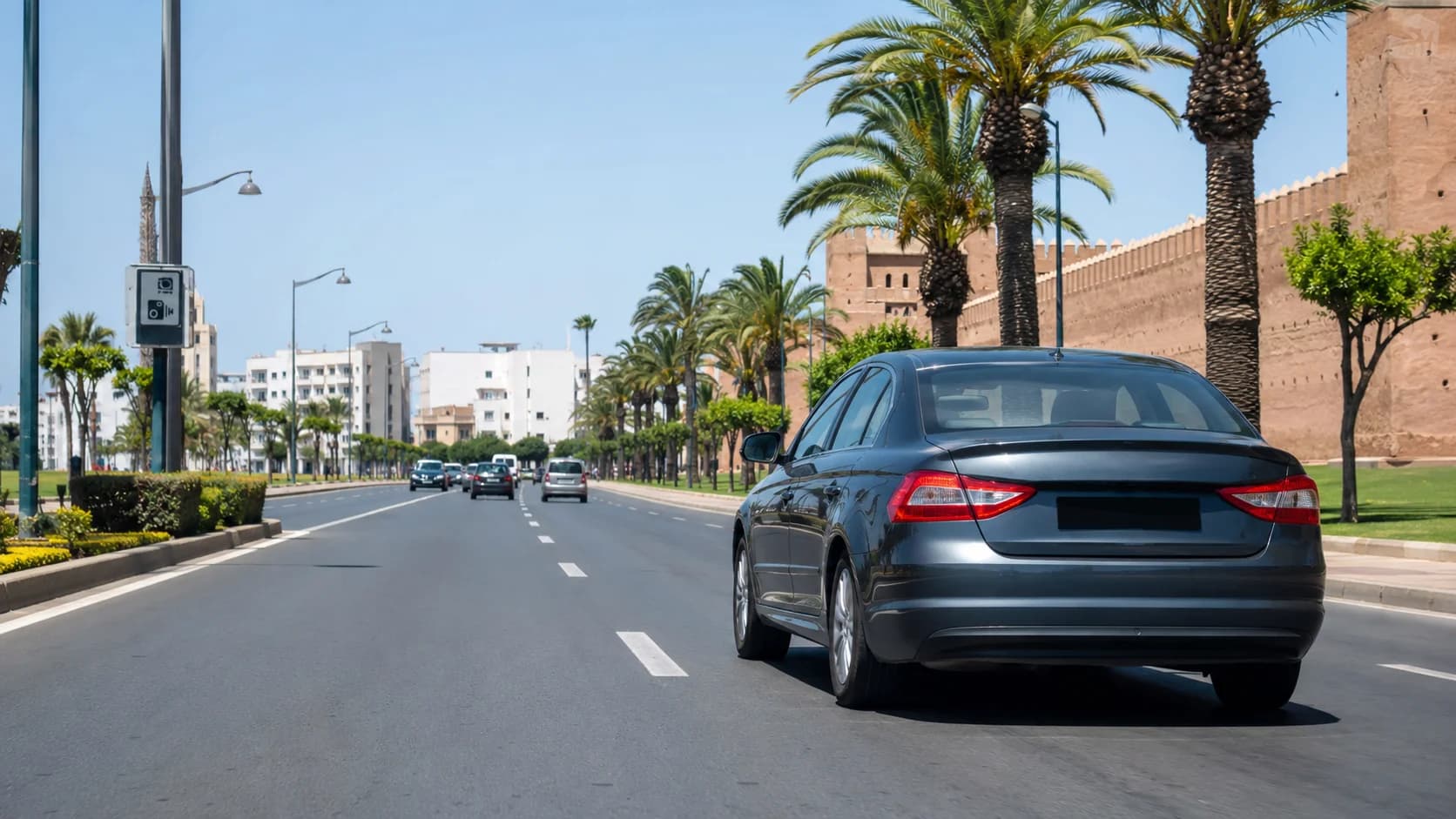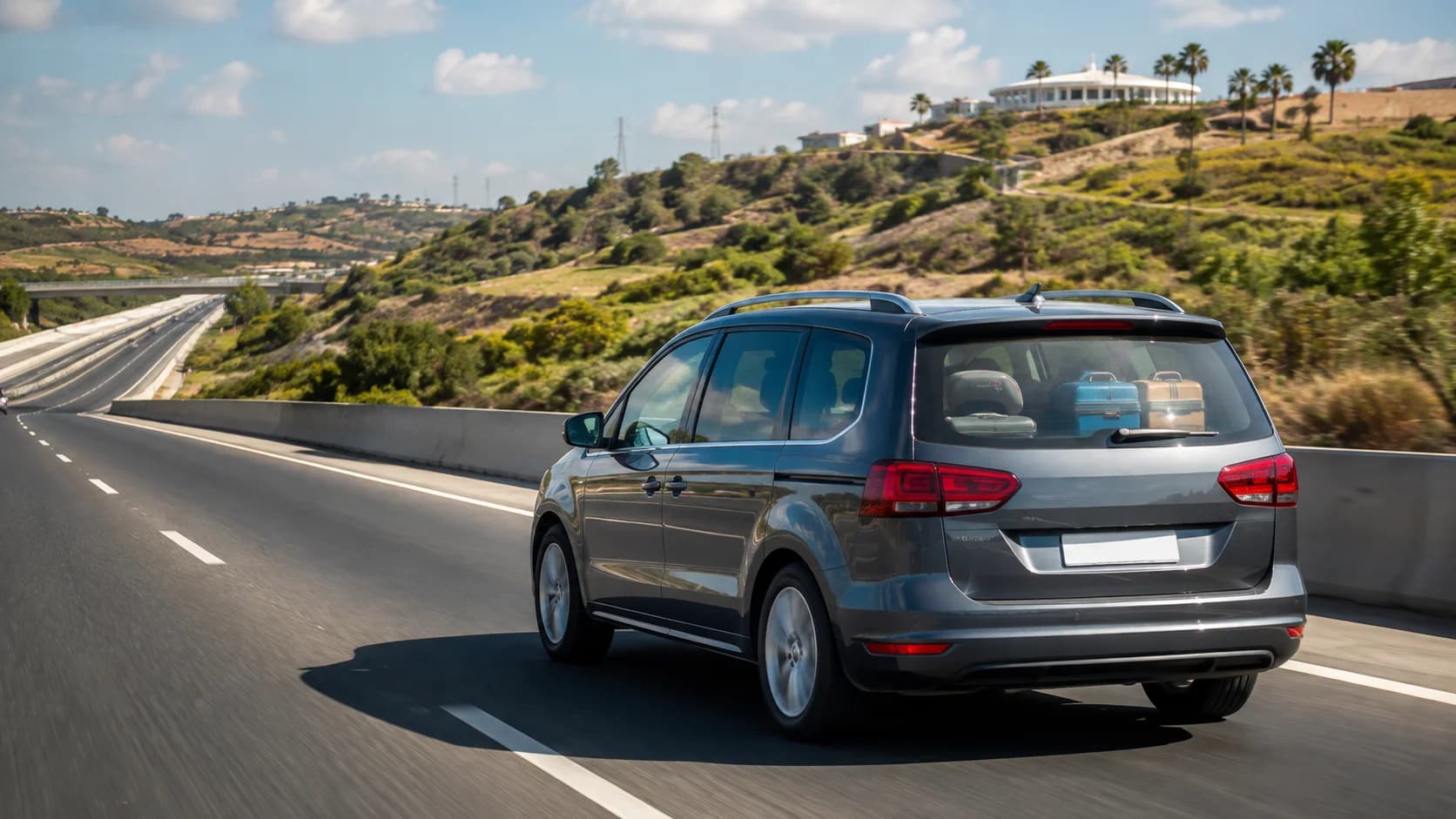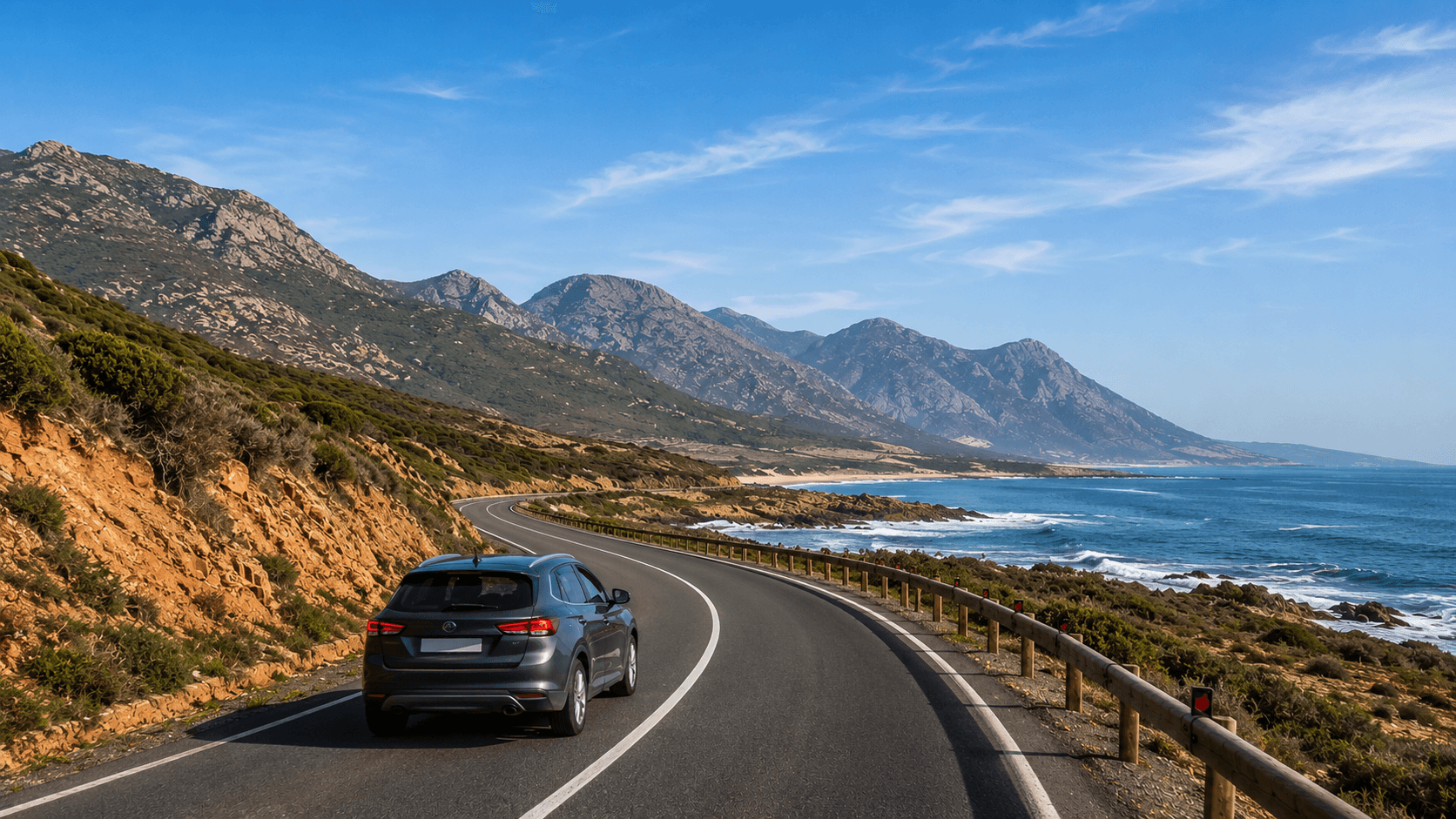








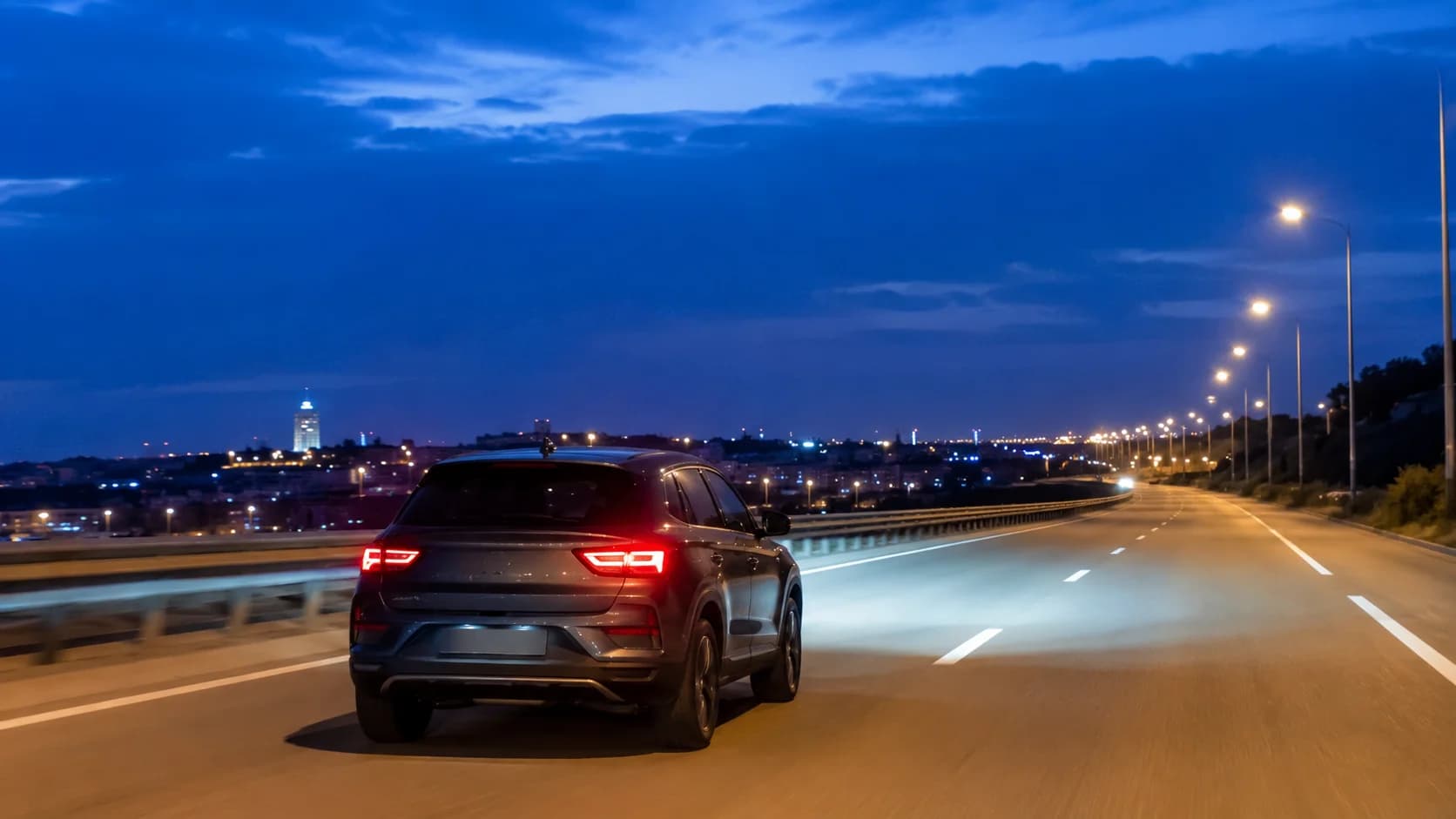
Night driving in Morocco can be manageable on major motorways, especially when leaving Rabat on clear routes like the A1 toward Casablanca or continuing later toward the A3 for Marrakech and Agadir. However, it is not ideal on rural roads, small coastal roads or unfamiliar national roads after dark. The biggest risks are poor lighting, pedestrians, scooters, animals, slow vehicles, glare from headlights and driver fatigue. For most travellers, the safest choice is to use motorways when possible, keep the route simple, drive slower than you would during the day and stop before tiredness becomes a problem.
Table of Contents
-
Is night driving safe in Morocco?
-
Motorways vs national roads after dark
-
The main hazards at night
-
Lighting, visibility and your headlights
-
Animals and pedestrians on rural roads
-
Fatigue and timing your departure
-
When to wait until morning
-
The right car for night highway driving
-
FAQs about night driving from Rabat
Is night driving safe in Morocco?
The honest answer is: sometimes, but not everywhere.
Night driving in Morocco is very different depending on the road. A direct motorway drive from Rabat to Casablanca is not the same as a small rural road, a dark coastal shortcut or a mountain route with sharp bends. The A1 and A3 are generally easier to manage because they are divided motorways with clearer lanes, service areas and more predictable traffic patterns. ADM, the Moroccan motorway operator, lists the A1 as the Rabat to Safi axis and the A3 as the Casablanca to Agadir axis, which means many long-distance night drives from Rabat use the A1 first before connecting toward the south.
Still, “easier” does not mean risk-free. The UK travel advice for Morocco warns that poor lighting can make night driving dangerous and that secondary routes and mountain roads become more hazardous in poor weather. Canada’s travel advice is even more direct, advising travellers to avoid driving at night and noting that pedestrians, scooters and animals can create risks on roadways.
For a visitor leaving Rabat after dark, the safest approach is simple: use main motorways, avoid improvised shortcuts, keep your speed conservative and do not start a long drive if you are already tired.
Motorways vs national roads after dark
The biggest decision is not only the destination. It is the road type.
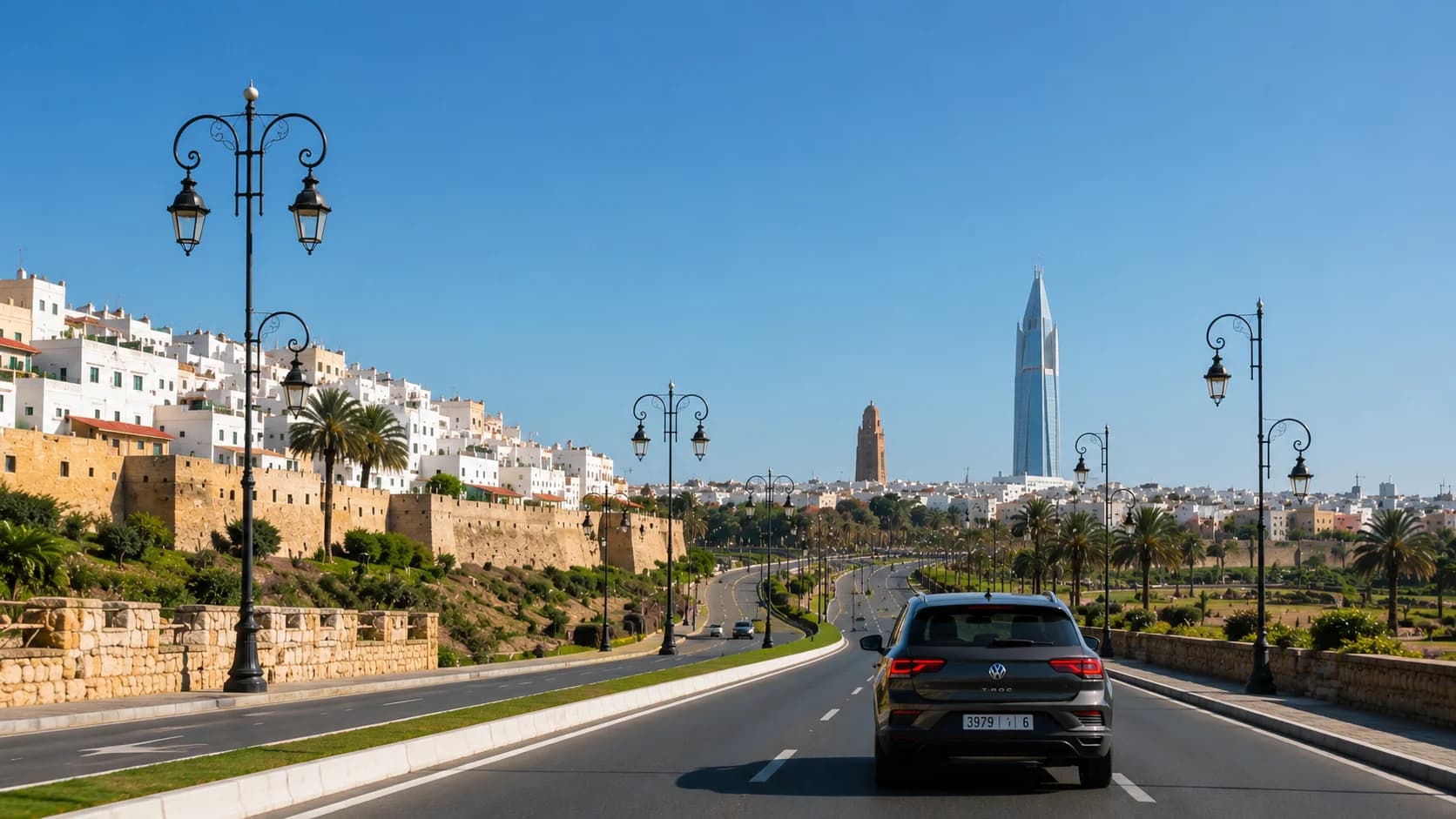
From Rabat, motorway driving is usually the better option after sunset. The A1 toward Casablanca is the main choice for business travellers, airport transfers and late returns from the capital. If the trip continues toward Marrakech or Agadir, the route normally continues through the Casablanca and Berrechid area before joining the A3. This is more predictable than taking smaller inland roads in the dark.
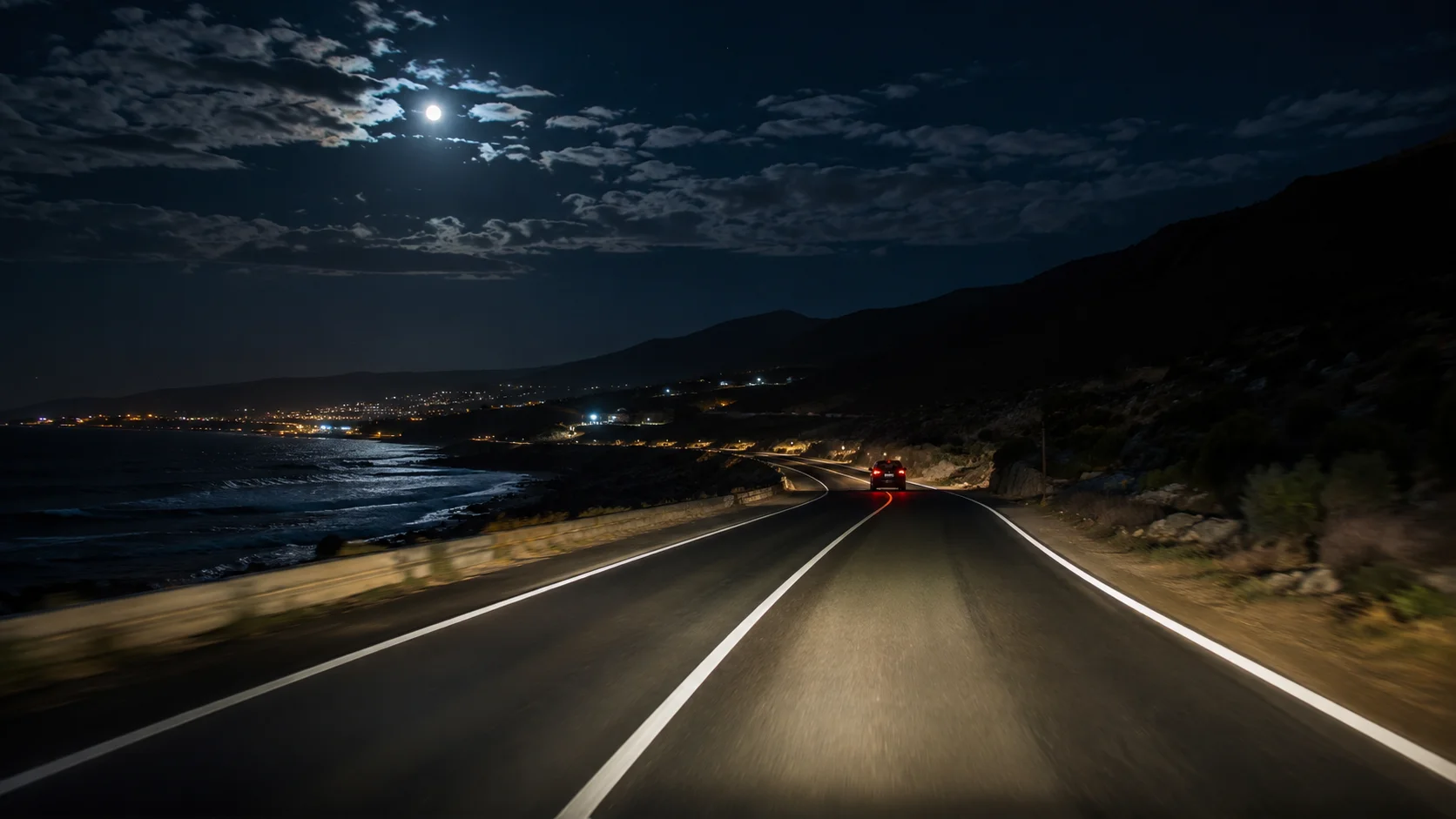
National roads and coastal roads can be beautiful by day, but more demanding at night. They may pass through small towns, beach areas, rural sections, dark junctions and local traffic zones. You can meet scooters without strong lights, pedestrians close to the edge of the road, slow trucks, parked vehicles or animals near the shoulder. Australia’s travel advice highlights poor lighting, rural road quality, pedestrians and animals as hazards, and says rural roads at night are particularly dangerous.
This does not mean every non-motorway road is unsafe. A short, familiar drive around Rabat, Harhoura, Skhirat or a nearby hotel zone can be fine with caution. The problem starts when a traveller treats a dark coastal road like a daytime scenic route. At night, you see less, react later and have less time to judge bends, shoulders and road edges.
The main hazards at night
The most common night-driving hazards around Rabat and on longer routes are not dramatic. They are ordinary things that become harder to see.
Poor lighting is the first issue. Some roads outside urban areas have limited street lighting, and even when the road surface is good, the edge of the road may be difficult to read. The US State Department advises extreme caution when driving at night in Morocco because of poor lighting, and also notes that traffic signals may be hard to see or may not always work.
The second issue is mixed traffic. On Moroccan roads, cars, trucks, scooters, pedestrians and sometimes animal-drawn vehicles can share the same space. This is especially important near exits, service areas, small towns and rural stretches. The US State Department also notes that pedestrians, scooters and animal-drawn vehicles can be common on roadways.
The third issue is speed difference. On a motorway, one vehicle may be moving quickly while another is climbing slowly, changing lanes late or entering from a ramp. On national roads, the difference can be even bigger: a car at normal speed, a slow truck, a scooter, a bicycle or a person walking near the edge.
The safest response is not to panic. It is to drive with more space than usual, reduce speed before dark sections, avoid aggressive overtaking and stay patient behind slow vehicles until the road is clearly safe.
Lighting, visibility and your headlights
Good visibility starts before the engine turns on. Before leaving Rabat at night, check the headlights, brake lights, indicators, mirrors and windscreen. A dirty windscreen can make glare much worse, especially when strong lights from oncoming cars reflect across the glass.
Use dipped beams when there is traffic ahead or coming toward you. Use full beams only on empty dark stretches where they do not disturb other drivers. Switch back early when you see oncoming lights. This matters because glare is one of the most tiring parts of night driving in Morocco, especially on roads without a central barrier.
Inside the car, keep the dashboard brightness comfortable. A very bright screen can reduce your night vision. Set navigation before you move, keep the phone mounted safely and avoid searching for routes while driving. If the route changes, stop somewhere safe before adjusting it.
On the A1 or A3, road signs and lane markings are easier to follow than on small roads, but you still need to prepare your exit early. Do not wait until the last second to change lanes near toll areas, service areas or junctions. Moroccan motorway traffic can be calm late at night, but a sudden lane change is still one of the easiest mistakes to avoid.
Animals and pedestrians on rural roads
Animals and pedestrians are one of the main reasons night driving in Morocco becomes risky outside major roads. In rural areas, you may see dogs, donkeys, sheep, goats or people walking near the road edge. During the day, these are easy to notice. At night, they may appear only when your headlights reach them.
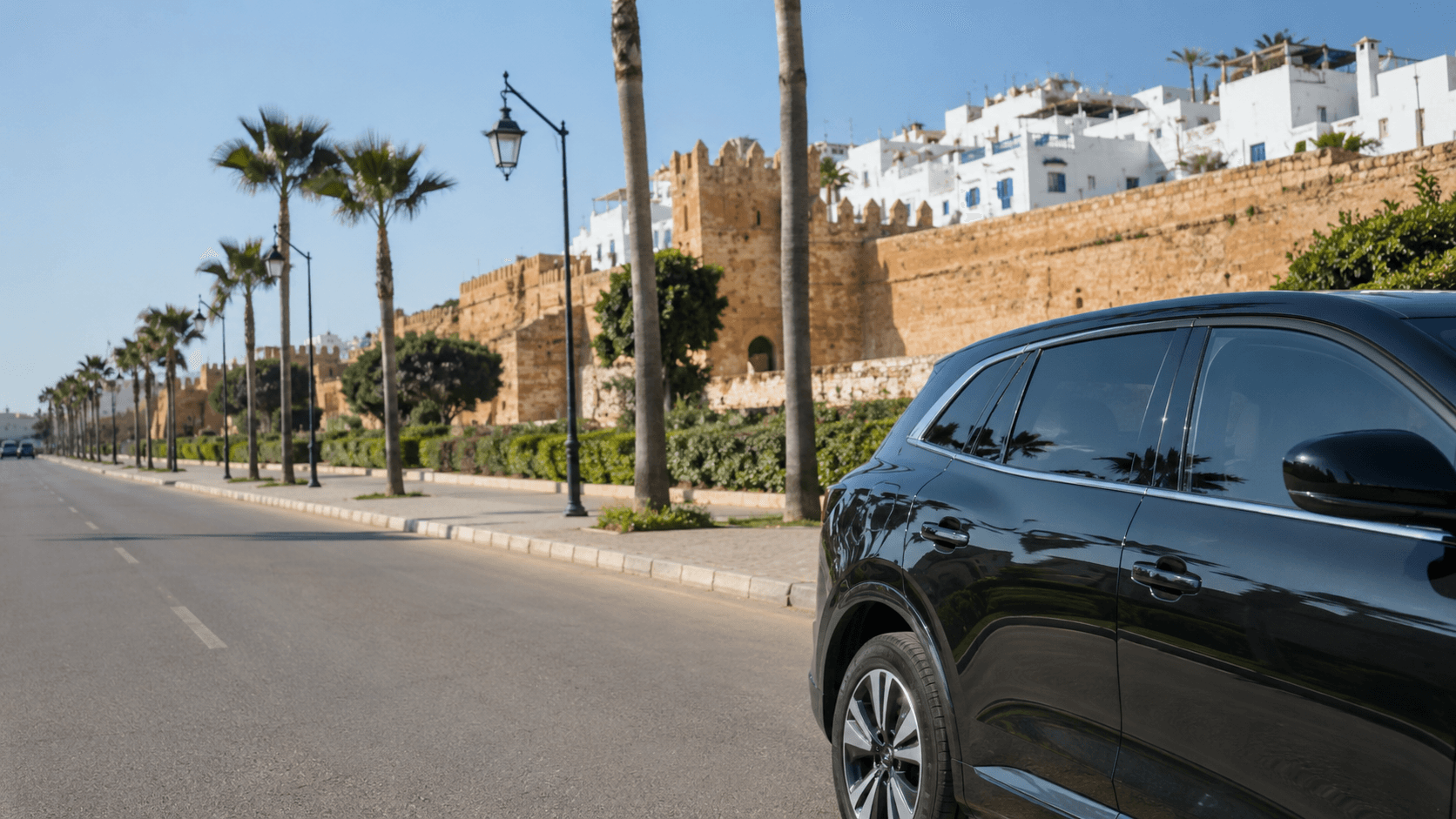
This is why coastal roads need extra care. The Atlantic road environment around Rabat, Temara, Harhoura, Skhirat and Bouznika can feel relaxed, but at night it can include pedestrians leaving cafés, local vehicles stopping suddenly, beach access roads and dark side streets. The road may be familiar to locals, but not to a visitor who just picked up a rental car.
If you are using a coastal route after dark, reduce speed before villages, roundabouts, beach exits and unlit sections. Keep both hands on the wheel, expect movement near the shoulder and leave enough distance to stop smoothly. Never assume that an empty-looking road is actually empty.
If the plan is a long coastal drive at night, especially beyond familiar zones, it is usually better to wait until morning. The view is better, the road is easier to read and the drive becomes part of the trip instead of a stressful transfer.
Fatigue and timing your departure
Fatigue is one of the most underestimated risks of driving Rabat at night. Many travellers leave after a late flight, a work meeting, a wedding, a dinner or a long sightseeing day. They feel fine at the start, then become slower after an hour on the road.
ADM’s own motorway safety content highlights fatigue as a serious concern: many Moroccan drivers identify drowsiness as a major cause of fatal motorway accidents, and some admit they have felt very tired but driven anyway.
The safest timing is to leave before you are tired, not after. If you arrive in Rabat late and still have a long drive to Casablanca, Marrakech or another city, think carefully before continuing. A motorway may feel simple, but the repetitive lane lines, dark surroundings and steady speed can make tiredness worse.
For longer night routes, stop every 90 minutes to 2 hours, even if you think you do not need it. ADM says service and rest areas are available across the motorway network year-round, 24/7, and spaced at regular intervals. Use them for fuel, coffee, water, stretching or a short rest.
If your eyes feel heavy, if you miss a sign, if your speed keeps changing without reason or if you start drifting in the lane, stop. Opening the window or turning up music is not a real solution to tiredness.
When to wait until morning
Waiting until morning is not a failure. Sometimes it is the smartest travel decision.
You should strongly consider waiting if the route includes rural roads, mountain roads, unknown coastal roads or small villages. You should also wait if there is heavy rain, fog, poor visibility or roadworks. Secondary routes and mountain roads become more hazardous when weather is poor, according to UK travel advice.
It is also better to wait if you are not used to Moroccan driving habits yet. The first day with a rental car is not the best time to test your confidence after dark. During daylight, you can understand roundabouts, tolls, signs, parking habits and local road rhythm more calmly.
For Rabat to Marrakech at night, the motorway route is possible for experienced and rested drivers, but it is still a long drive. If you are arriving late, travelling with children or already tired, sleeping in Rabat or Casablanca and leaving early can make the journey safer and more comfortable.
For Rabat coastal drives, the same rule applies. A short local drive after dinner can be fine. A long scenic coastal route in the dark is better saved for daylight.
The right car for night highway driving
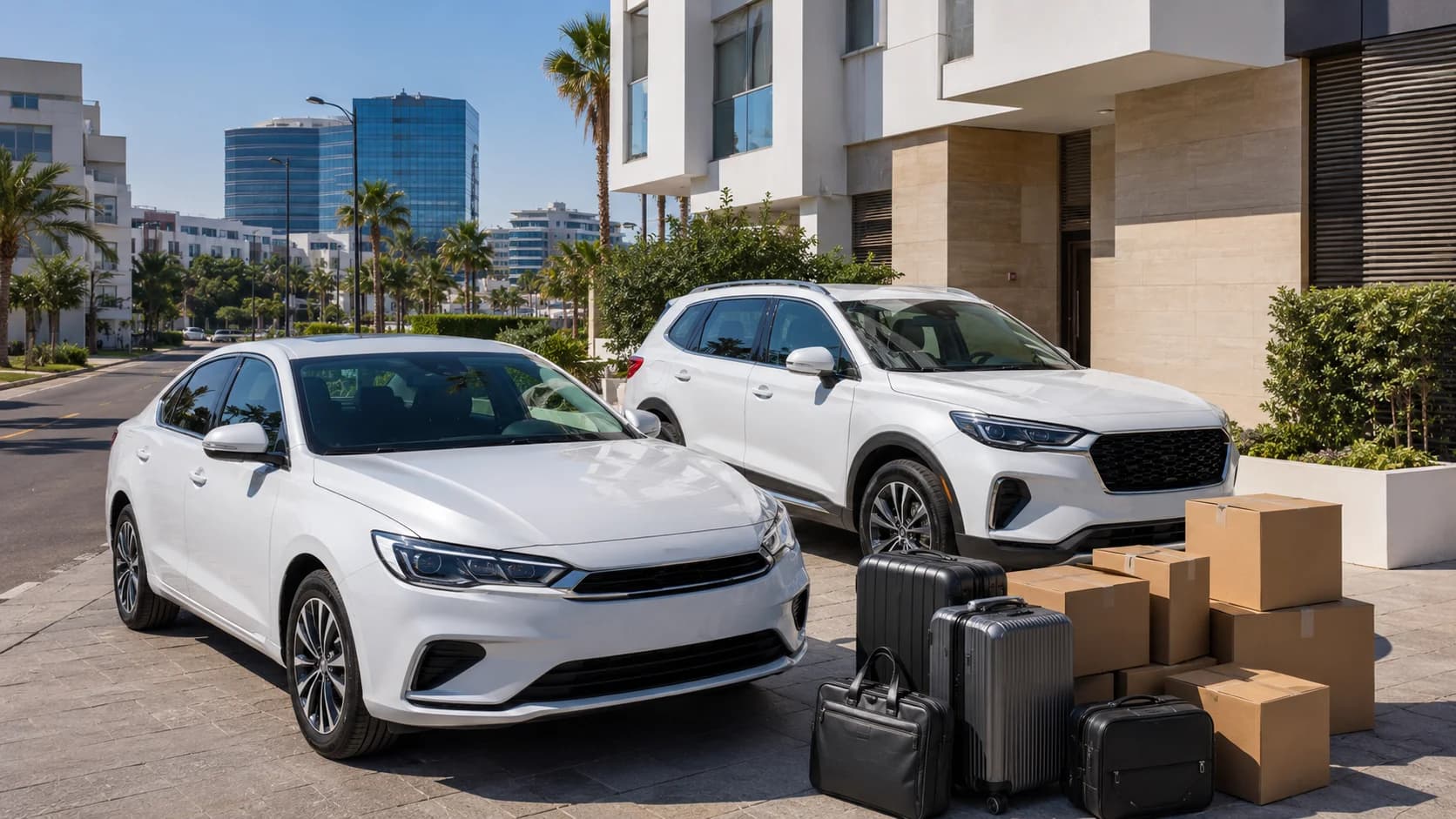
The car will not remove every risk, but it can make a real difference. For night highway driving, choose a vehicle that feels stable, comfortable and easy to control. A well-equipped sedan or SUV is usually better than the smallest economy car for long after-dark routes because it gives you a calmer driving position, stronger road presence and better comfort over distance.
A sedan rental Rabat is a smart choice for motorway trips, business travel and Rabat to Casablanca drives. Sedans are usually comfortable at steady speeds, easier to park than large cars and suitable for couples or small families with luggage.
An SUV rental Rabat is better if you want a higher seating position, more luggage space and extra confidence on mixed roads. This can be useful if your trip includes coastal roads, family travel or longer routes after dark.
A 4x4 rental Rabat is not necessary for normal motorway driving, but it can be useful for travellers planning rural, mountain or more demanding routes during the day. Even with a 4x4, it is still better to avoid unfamiliar rural roads at night.
Before leaving, ask for a quick handover: lights, wipers, fuel type, spare equipment, emergency contact and WhatsApp support. For confident after-dark driving, choose a stable, well-equipped 2026-model SUV or sedan from MarHire Car Rabat, with full insurance included and 24/7 WhatsApp support wherever the road takes you.
FAQs about night driving from Rabat
Is it safe to drive at night in Morocco?
It can be safe on major roads and motorways if you are rested, careful and using a simple route. However, rural roads, small coastal roads and mountain routes are much riskier after dark because of poor lighting, pedestrians, animals and reduced visibility.
Is night driving on Moroccan motorways okay?
Motorway driving is usually the safest form of night driving in Morocco because the lanes are clearer and the route is more predictable. Still, you should keep extra distance, avoid speeding, prepare exits early and stop before fatigue becomes a problem.
What are the dangers of driving in Morocco at night?
The main dangers are poor lighting, glare from headlights, slow vehicles, pedestrians, scooters, animals, unexpected obstacles and tiredness. These risks are stronger on national and rural roads than on toll motorways.
Should I avoid national roads at night?
Yes, when possible. National roads can be narrow, busy and less predictable after dark. If a motorway alternative exists, it is usually the better choice for visitors leaving Rabat at night.
Are there animals on the road at night in Morocco?
Yes, animals can appear on rural roads and near small towns. Dogs, donkeys, sheep or goats may be close to the road edge. Slow down in dark rural sections and never assume the shoulder is clear.
How do I stay safe driving from Rabat after dark?
Use main motorways, check your lights before leaving, keep your speed conservative, avoid distractions, keep distance from trucks, stop for breaks and do not continue if you feel tired.
Is the coastal road safe at night?
Short coastal drives near Rabat can be manageable with caution, but longer coastal routes are better in daylight. At night, beach access roads, pedestrians, scooters, parked cars and unlit sections make the road harder to read.
What car is best for night highway driving?
A stable sedan or SUV is usually best for night highway driving. Sedans are comfortable and efficient for motorway trips, while SUVs offer a higher driving position and more space for families or luggage.
Should I drive to Marrakech at night?
It is possible by motorway if you are experienced, rested and comfortable with long-distance night driving. If you arrive late, feel tired or are travelling with children, it is safer to rest and leave in the morning.
What should I do if I get tired driving at night?
Stop at a service area or safe location as soon as possible. Drink water, rest, stretch or change drivers if another insured driver is available. Do not rely on loud music, open windows or coffee alone if you are already sleepy.